Impact of Iron Supplementation on Neonatal Outcomes in Non-Anemic Pregnant Women
This randomized placebo-controlled trial investigates the effects of iron supplementation on neonatal outcomes in non-anemic pregnant women. With increased iron demands during pregnancy, routine iron prophylaxis is commonly recommended. However, the necessity of such supplementation in non-anemic women remains controversial. Our study involved 200 participants, with 100 receiving 50 mg of ferrous sulfate daily and the other 100 receiving placebo. While no overall significant neonatal outcome differences were found, there was a notable increase in gestational age birth rates in the iron group. Thus, routine supplementation is not advised for non-anemic women.

Impact of Iron Supplementation on Neonatal Outcomes in Non-Anemic Pregnant Women
E N D
Presentation Transcript
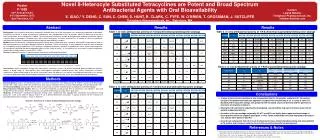
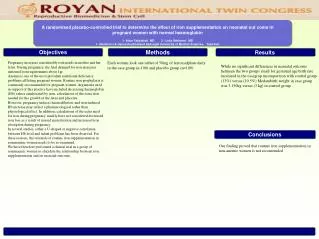
A randomised placebo-controlled trial to determine the effect of iron supplementation on neonatal out come in pregnant women with normal heamoglobin 1- Afsar Tabatabaii MD 2 - Leila Sekhavat MD 1- Obstetrics & GynecoloyShaheed Sadoughi University of Medical Sciences, Yazd,Iran Objectives Methods Results Pregnancy increases considerably iron needs in mother and her fetus. During pregnancy, the fetal demand for iron increases maternal iron requirements about 1gr. Anemia is one of the most prevalent nutritional deficiency problems afflicting pregnant women. Routine iron prophylaxis is commonly recommended for pregnant women. Arguments used in support of this practice have included decreasing haemoglobin (Hb) values ameliorated by iron, calculations of the extra iron needed for the growth of the fetus and placenta. However, pregnancy induces haemodilution, and iron-induced Hb increase may reflect a pharmacological rather than physiological effect. In addition, calculations of the extra need for iron during pregnancy usually have not considered decreased iron loss as a result of missed menstruation and increased iron absorption during pregnancy. In several studies, either a U-shaped or negative correlation between Hb level and infant problems has been observed. For these reasons, the rationale of routine iron supplementation in nonanaemic women needs to be re-examined. We have therefore performed a clinical trial in a group of nonanaemic women to elucidate the relationship between iron supplementation and on neonatal outcome. Each woman look one tablet of 50mg of ferrossalphate daily in the case group (n-100) and placebo group (n=100) While no significant differences in neonatal outcome hetmeen the two groups small for gestatnal age birth rate increased in the casegrop incompavison with contral group (13%) versas (10.5%) Medambirth weight in case group was 3.150kg versas (3 kg) in control group . Conclusions Our finding proved that routine iron sopplememtation in non-anemic women is not recomemded References