Predictive Modeling in Pharmacokinetics and Pharmacodynamics: Linear vs. Non-linear Systems Study
150 likes | 571 Views
Explore the comparison between linear and non-linear systems in pharmacokinetic and pharmacodynamic modeling, including prediction of responses and specific considerations. Learn about saturation kinetics, threshold effects, and the impact of induction on drug effects.


Predictive Modeling in Pharmacokinetics and Pharmacodynamics: Linear vs. Non-linear Systems Study
E N D
Presentation Transcript
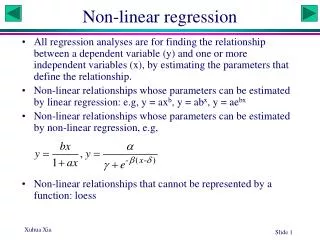
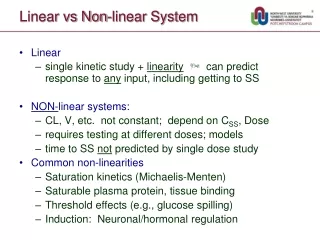
Linear vs Non-linear System Linear single kinetic study + linearity can predict response to any input, including getting to SS NON-linear systems: CL, V, etc. not constant; depend on CSS, Dose requires testing at different doses; models time to SS not predicted by single dose study Common non-linearities Saturation kinetics (Michaelis-Menten) Saturable plasma protein, tissue binding Threshold effects (e.g., glucose spilling) Induction: Neuronal/hormonal regulation
PK/DP Modeling PK/PD Modeling • Procedure: • Estimate exposure and examine correlation between PD other endpoints (including AE rates) • Use mechanistic models • Purpose: • Estimate therapeutic window • Dose selection • Identify mechanism of action • Model probability of AE as function of exposure (and covariates) • Inform the label of the medicine
Specific considerations of PD/PK • Patient populations • Paediatric, gender, elderly • Other medications and foods • Drug-drug • Drug-food • Pharmacogenomics • Genetic polymorphism – Codeine Cyp2D6 ultrarapid • Other diseases, • Co-infections, etc