Download
1 / 13
130 likes | 252 Views
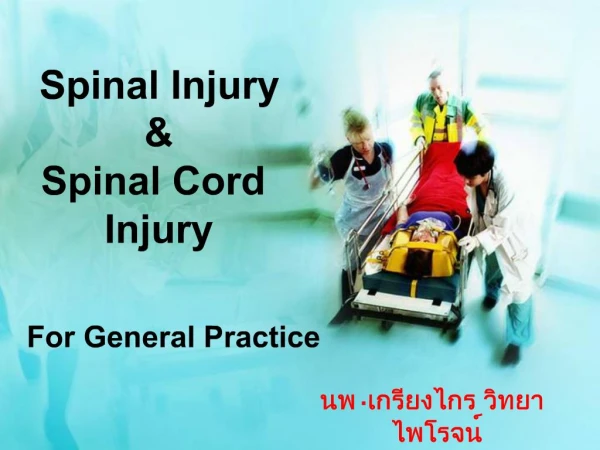
This presentation by Paul Beaumont from SOVRIN Training covers crucial first aid management strategies for acute back pain and spinal injuries. Key topics include the use of ice, medication, gentle exercise, and heat for relief, as well as identifying causes of spinal injuries like falls, heavy impacts, and sports injuries. Learn to recognize signs and symptoms such as pain, weakness, and deformity, and understand the importance of safety, immobilization, and calling for help. Equip yourself with the knowledge to effectively respond to back injuries.

E N D
Back Injury First Aid Management Presentation by: Paul Beaumont SOVRIN Training
Acute Back PainMuscle Strain • Ice • Medication • Gentle exercise • Heat/Ice
Causes of Spinal Injury • Falls from height • Heavy objects falling onto casualties upper body • Diving into shallow water • MVCs • Sporting injuries
“In only 27% of casualties who sustain spinal cord injury is the degree of damage caused by impact alone”.
Signs & Symptoms • Pain • Weakness or paralysis • Loss of sensation (numbness) • Parathesia (pins and needles) • Incontinence • Symptoms of shock • Priaprism in males • Deformity of the spinal column
Management • Safety • Airway and breathing • Immobilise in situ • Call for help • Reassure casualty
“50% of casualties with cord injury exhibit normal motor and sensory responses”.