Understanding Cell Structure and Function: Insights into Membrane Dynamics and Transport Mechanisms
Discover the fundamental concepts of cell theory, including the cellular basis of life and the diversity of cell types. Learn about the components of a generalized cell, such as the plasma membrane, cytoplasm, and nucleus, along with the crucial roles of membrane proteins. Explore various transport mechanisms, including passive and active processes, facilitated diffusion, osmosis, and vesicular transport. Gain insights into the functions of the cytoplasm and organelles, and understand how these cellular structures enable essential biochemical activities for life.

Understanding Cell Structure and Function: Insights into Membrane Dynamics and Transport Mechanisms
E N D
Presentation Transcript
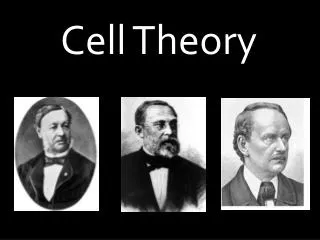
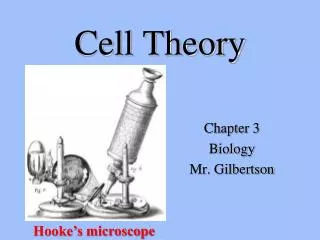
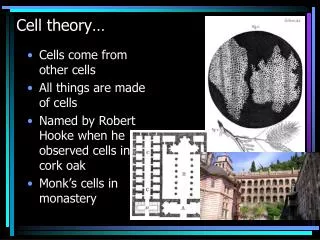
Cell Theory • The cell is the smallest structural and _ • Organismal functions depend on ____________________________________ cell functions • Biochemical activities of cells are dictated by their specific subcellular structures • ___________________________________ of life has a cellular basis
Cell Diversity • Over _ • Types differ in size, shape, subcellular components, and functions
Generalized Cell • All cells have some common structures and functions • Human cells have three basic parts: • Plasma membrane • flexible outer boundary • Cytoplasm • intracellular fluid containing organelles • Nucleus • control center
Plasma Membrane • Bimolecular layer of lipids and proteins in a constantly changing _ • Plays a _ • Separates intracellular fluid (ICF) from extracellular fluid (ECF)
Membrane Proteins • Firmly inserted into the membrane (most are transmembrane) • Functions: • Transport proteins (channels and carriers), enzymes, or _
Membrane Proteins • Loosely attached to integral proteins • Include ________________________on intracellular surface and glycoproteins on extracellular surface • Functions: • ________________________________, motor proteins, cell-to-cell links, provide support on intracellular surface, and form part of glycocalyx
Functions of Membrane Proteins • ________________________________ for signal transduction • Attachment to cytoskeleton and extracellular matrix
Membrane Junctions • Three types:
Membrane Junctions: Gap Junctions • Transmembrane proteins form _ • For spread of ions between cardiac or smooth muscle cells
Membrane Transport • Plasma membranes are _ • Some molecules easily pass through the membrane; others do not
Types of Membrane Transport • Substance moves down its concentration gradient • Occurs only in living cell membranes
Passive Processes • Carrier-mediated facilitated diffusion • Channel-mediated facilitated diffusion
Passive Processes: Simple Diffusion • Nonpolar lipid-soluble (hydrophobic) substances _
Passive Processes: Facilitated Diffusion • Certain lipophobic molecules (e.g., glucose, amino acids, and ions) use _________________________________, both of which: • Exhibit _ • Are ________________________________; rate is determined by number of carriers or channels • Can be regulated in terms of activity and quantity
Facilitated Diffusion Using Carrier Proteins • Transmembrane integral proteins transport specific polar molecules (e.g., sugars and amino acids)
Facilitated Diffusion Using Channel Proteins • Aqueous channels formed by transmembrane proteins selectively transport ions or water • Two types: • Leakage channels • Gated channels
Passive Processes: Osmosis • Movement of _ • Water diffuses through plasma membranes: • Through the lipid bilayer
Passive Processes: Osmosis • Water concentration is determined by solute concentration because _ • When solutions of different osmolarity are separated by a membrane, _
Tonicity • Tonicity: The ability of a solution to cause a cell to shrink or swell • A solution with the same solute concentration as that of the cytosol • A solution having greater solute concentration than that of the cytosol • A solution having lesser solute concentration than that of the cytosol
Membrane Transport: Active Processes • Two types of active processes: • Both use _____________________ to move solutes across a living plasma membrane
Active Transport • Requires _ • Moves solutes _____________________ a concentration gradient
Vesicular Transport • Transport of _______________________, macromolecules, and fluids across plasma membranes • Requires cellular energy (e.g., ATP)
Vesicular Transport • Functions: • Exocytosis • Endocytosis • transport into cell • Transcytosis • Substance (vesicular) trafficking • transport from one area or organelle in cell to another
Endocytosis and Transcytosis • Involve formation of protein-coated vesicles • Often _
Endocytosis • Phagocytosis _ • pseudopods engulf solids and bring them into cell’s interior • Pinocytosis _ • plasma membrane in-folds, bringing ______________________________________ and solutes into interior of the cell
Exocytosis • Examples: • Neurotransmitter release • Ejection of wastes
Cytoplasm • material between plasma membrane and the nucleus • largely water with dissolved protein, salts, sugars, and other solutes
Cytoplasm • metabolic machinery of the cell • chemical substances such as glycosomes, glycogen granules, and pigment
Cytoplasmic Organelles • Specialized cellular compartments • Mitochondria, peroxisomes, lysosomes, endoplasmic reticulum, and Golgi apparatus • Cytoskeleton, centrioles, and ribosomes
Mitochondria • Double membrane structure with shelf-like cristae
Ribosomes • Granules containing protein and _ • Site of _ • Free ribosomes synthesize _ • Membrane-bound ribosomes synthesize proteins to be _
Endoplasmic Reticulum (ER) • Interconnected tubes and parallel membranes enclosing cisternae • Continuous with the _ • Two varieties
Rough (ER) • External surface studded with ribosomes • Manufactures _ • Responsible for the synthesis of _
Smooth ER • Tubules arranged in a looping network • Catalyzes the following reactions in various organs of the body • In the liver • breakdown _ • detoxification of drugs • In the testes • synthesis of steroid-based hormones: _
Golgi Apparatus • Stacked and flattened membranous sacs • Functions in • Concentration • Transport vessels from the ER fuse with the cis face of the Golgi apparatus
Golgi Apparatus • Proteins then pass through the Golgi apparatus to the _ • Secretory vesicles leave the trans face of the Golgi stack and move to designated parts of the cell
Lysosomes • Spherical membranous bags _ • Digest ingested bacteria, viruses, and toxins • Degrade _ • Breakdown nonuseful tissue • Breakdown _ • Secretory lysosomes are found in _
Peroxisomes • Membranous sacs containing _ • _______________________________ harmful or toxic substances • Neutralize dangerous free radicals • Free radicals – highly reactive chemicals with unpaired electrons (i.e., O2–)
Cytoskeleton • The “skeleton” of the cell • ______________________________, elaborate series of rods running through the cytosol • Consists of _
Centrioles • Small barrel-shaped organelles located in the centrosome near the nucleus • Pinwheel array of nine triplets of microtubules • Form the bases _
Cilia • Whip-like, motile cellular extensions _
Nucleus • Contains _ • Gene-containing control center of the cell • Contains the genetic library with blueprints for nearly all cellular proteins • Dictates the _
Nuclear Envelope • _______________________________ double membrane barrier containing pores • Encloses jellylike _
Nuclear Envelope • Outer membrane is ______________________________________ and is studded with ribosomes • Inner membrane is lined with the nuclear lamina, • which _ • ______________________________________ regulates transport of large molecules into and out of the nucleus
Nucleoli • Dark-staining _ • Site of _
Chromatin • Threadlike strands of _ • Form condensed, barlike bodies of _
Cell Cycle • Growth (G1), synthesis (S), growth (G2) • Mitosis and cytokinesis