Download
1 / 18
200 likes | 335 Views
The System Development Life Cycle (SDLC) is a structured approach to developing systems, encompassing phases such as analysis, design, development, deployment, maintenance, and decommissioning. This process ensures that each system meets its intended objectives with minimal unexpected outcomes. The Sustainability Cycle builds upon SDLC principles by incorporating periodic reviews to assure system relevance and effectiveness. It emphasizes re-designing parts of the system that do not meet desired outcomes, facilitating continuous improvement. Together, these cycles enhance the longevity and efficacy of systems in various contexts.

E N D
CS5493 SDLC
SDLC • System Development Life Cycle
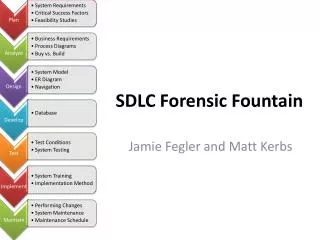
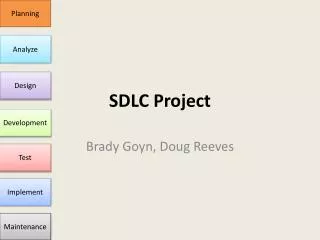
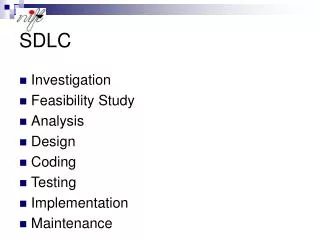
SDLC • Simplified SDLC • Analysis (planning) • Design • Development • Deployment (implementation) • Maintenance (assessment) • Decommission
SDLC • Analysis – • collect data and determine the needs for a new system. • Determine the objectives for the system
SDLC • Design • Design a system that can be implemented taking into account • the required objectives, • desired outcomes, and • resources available
SDLC • Deployment (implementation) • Don't let all that hard work go to waste! • Support from management • Budgeting/purchasing • Training • Publishing • etc
SDLC • Maintenance (assessment) • Measure if the system meets the objectives • Must work as intended and produce the desired outcomes • There could be unexpected outcomes • Implement a Sustainability Cycle
SDLC • Decommission • Your system may eventually become obsolete • Secure disposal of assets
The Sustainability Cycle • Establishing a system in-perpetuum. • Analysis (planning) • Design • Development • Deployment (implement) • Maintenance
Sustainability Cycle • What makes this different from SDLC?
Sustainability Cycle • Analysis • Periodic review of the system (6-24 months) • To insure a proper review, someone must be held accountable for the review.
Sustainability Cycle • re-Design • Those aspects of the original design that • do not produce the desired outcomes, or • produce unexpected negative results must be re-designed, replaced, decommissioned.
Sustainability Cycle • Deployment • implement the changes
Sustainability Cycle • Maintenance • Repeat the sustainability cycle
SDLC • SDLC can be applied to physical systems, policies & procedures, computer security awareness program (or training), etc.
Program, Policies, and Procedures • Implementing a p* has benefits and consequences. • A good p* is expected to produce desired outcomes. • A p* can have undesirable and unexpected consequences. • Use a sustainment cycle to keep it relevant. Periodically review the effectiveness of your p* and be prepared to make changes.
Pragmatism • The effectiveness of a policy is dictated by its observable results. • The policy must work as intended and produce the intended outcome.