Understanding the U.S. Supreme Court: Role, Functions, and Historical Significance
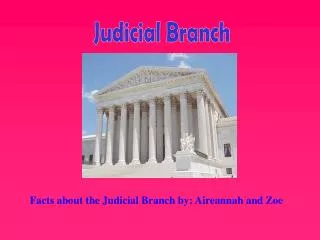
The U.S. Supreme Court, the pinnacle of the judicial branch, is integral to ensuring equal justice under the law. Established with a size of nine justices since 1869, the Court is pivotal in interpreting the Constitution through judicial review, a power that allows it to determine the constitutionality of laws. Notable justices include Sandra Day O’Connor, Ruth Bader Ginsburg, and Thurgood Marshall. The Court's sessions run from October to June, affecting crucial legal decisions that resonate within society. Explore its influence, historical cases, and the appointment process of justices.


Understanding the U.S. Supreme Court: Role, Functions, and Historical Significance
E N D
Presentation Transcript
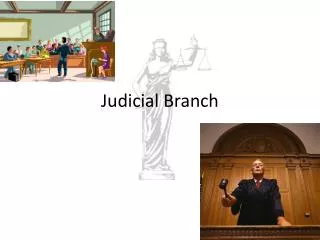
Judicial Branch The Supreme Court, Equal Justice under the Law, The Federal Court System
#49 The Supreme Court • Head of the Judicial Branch • Justices: The Judges who sit on the Supreme Court Bench • Size of the Court is determined by the Congress • Constitution doesn’t specify • Number has been set at 9 since 1869 • Justices are appointed by the President, approved by Senate • Appointed for Life, can only be removed through the impeachment process
#49 The Supreme Court • Annual salary for Chief Justice is $181,400 • Associate Justices get $173,600 • Justices are typically men and all have been lawyers • Sandra Day O’Connor: first woman appointed to the court in 1981 • Ruth Bader Ginsburg: appointed in 1993 • Thurgood Marshall: first African American in 1967
#49 The Supreme Court • Judicial Review • Unique feature of US Court system • Judicial Review: courts have the power to determine whether a law or presidential action is Constitutional • Supreme Court holds ultimate authority • Unconstitutional: a law that conflicts with the US Constitution • Constitution doesn’t specify this • John Marshall: Chief Justice from 1801-1835
#49 The Supreme Court • Influence of John Marshall • Idea of Judicial Review was promoted by Marshall for the first time in 1803 in the case of Marbury v. Madison • Marbury v. Madison • Involved William Marbury, who’d been promised appt. as Justice of the Peace and Secretary of State James Madison • Significance: established the Supreme Court’s power of judicial review
#49 The Supreme Court • Supreme Court cannot begin a case on it’s own • Mainly an Appeals Court • Supreme Court decides which cases it will hear and places them on it’s docket. • Docket: the calendar/schedule for the Court • Supreme Court chooses to hear cases that involve issues of significant public interest • 4 judges have to want to hear the case • If it refuses, then original decision stays in effect • Remand: Supreme Court can order a case to a lower court fo a new trial
#49 The Supreme Court • Supreme Court begins session on the first Monday of October and ends in late June • Once a case is to be heard, lawyers for each side prepare a brief. • Brief:a written statement explaining the main points of one side of the argument • Lawyers then present their case to the Court • Get only 30 minutes • Court then issues it’s opinion. • Concurring Opinion: what a Justice writes when they agree with the ruling but for different reasons • Dissenting Opinion: a written explanation as to why a Justice disagreed with the decision of the Court
#49 The Supreme Court • The Court helps make the Constitution a flexible document by meeting the demands of society as it changes • In addition to judicial review and being an Appeals Court, the Supreme Court has Original Jurisdiction: the right to hear a case for the first time • Involving diplomatic representative of another country • Involving disputes btw states • Involving a State and the Federal government