Enhancing Web Accessibility: An Overview of W3C and WAI Initiatives
This session provides an introduction to the World Wide Web Consortium (W3C) and its Australian presence, focusing on the Web Accessibility Initiative (WAI). We will explore recent updates from working groups, discuss non-WAI efforts with relevance to accessibility, and share how to get involved in W3C’s mission to make the web accessible for all users, particularly those with disabilities. Additionally, we will highlight key guidelines like the Authoring Tool Accessibility Guidelines (ATAG) and resources for web developers to ensure compliant and accessible web content.

Enhancing Web Accessibility: An Overview of W3C and WAI Initiatives
E N D
Presentation Transcript
W3C WAIupdate Dr Scott Hollier OZeWAI 2011
Introduction • Overview of the W3C • Australian W3C presence • Web Accessibility Initiative (WAI) • Working group updates and standards • Non-WAI working groups with accessibility relevance • How to get involved
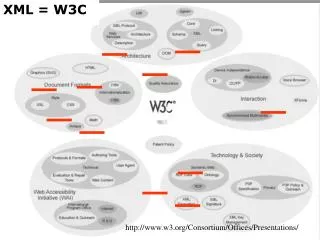
W3C Overview • Founded by Tim Berners-Lee in 1994 • An international community where Member organizations, a full-time staff, and the public work together to develop Web standards. • Mission: to lead the Web to its full potential. • W3C standards becoming ISO/IEC standards • Administered by three institutions: • MIT (USA) • ERCIM (EU) • Keio University (Japan)
Australian presence • 325 member organisations worldwide • 6 Australian members: • AGIMO (Brian Stonebridge) • CSIRO (Kerry Taylor) • Effective Measure (Scott Julian) • Media Access Australia (Scott Hollier) • NICTA Ltd (N/A) • Vision Australia (Damien McCormack) • Australian office run by CSIRO (w3c.org.au)
W3C processes • Groups: • Advisory Committee • Working groups: about 50 long-term standard development • Interest groups: more forum-based • Incubator groups: 12 month investigation
W3C WAI • Launched in 1997 • Mission: to develop strategies, guidelines, and resources to help make the Web accessible to people with disabilities
Authoring tools • Authoring Tool Accessibility Guidelines (ATAG) 2.0 Public Draft (22 July 2011) • Implementing ATAG 2.0 Public Draft (22 July 2011) • Guidelines split into two parts: • PART A: making the user interface of the authoring tool is accessible • PART B: ensuring the tool produces accessible content
Education & outreach • Before and After Demonstration (BAD) open for comment • Policies relating to web accessibility • Presentation materials • Promoting of WAI standards • Documents relating to making presentations accessible to all • Contributing to other W3C groups
Evaluation & repair tools • Evaluation and Repair Language (EARL) requirements and scheme significantly updated in May 2011 • WCAG 2.0 Evaluation Methodology Task Force (Eval TF) commenced this year • Eval TF aim: to develop an internationally harmonized methodology for evaluating the conformance of websites to WCAG 2.0
Protocols & formats • Accessible Rich Internet Applications (WAI-ARIA) at Candidate Recommendation (18 January 2011) • Why so important: Allows developers to provide specific semantic information to assistive technologies • Tied in closely with HTML5 standards development and the HTML accessibility Task Force
RESEARCH & DEVELOPMENT • Moved from IG to WG this year • Aim: to increase the incorporation of accessibility considerations into research on web technologies • First topic: web accessibility metrics • Online symposium 5 December 2011
User agents • Designed for developers building web browsers • User Agent Accessibility Guidelines 2.0 (draft) internal update (20 October 2011) • Implementing UAAG 2.0 updated (20 October 2011)
Web CONTENT • Many updated resources during 2011: • How to meet WCAG 2.0 • Understanding WCAG 2.0 • Techniques for WCAG 2.0 • Flash techniques (end 2010) • PDF techniques • Most of these resources are in draft
WAI-ACT • Cooperation Framework for: • Guidance on Advanced Technologies • Evaluation Methodologies • Research Agenda to Support eAccessibility • Audio-visual media accessibility • European Commission (EC)-funded project.
Other non-WAI developments • HTML 5: big accessibility potential, especially for multimedia integration and accessible media players, closely tried in with ARIA • Mobile web • Document formats • Cloud • Social media
Get involved • Organisations: • Must pass W3C evaluation • Cost varies based on type of organisation and geographical location • Individuals: • Join the WAI IG mailing list • Participate in public feedback requests • Apply to become an invited expert for a WG • http://www.w3.org/WAI/participation.html
FURTHER INFORMATION Advice is free! • E-mail: scott.hollier@mediaaccess.org.au • Telephone: (08) 9311 8230 • Website: www.mediaaccess.org.au • Twitter: @mediaaccessaus Other active W3C participants here at OZeWAI: • Dr Andrew Arch • Vivienne Conway • Shadi Abou-Zahra (via Skype)