Understanding Clouds: Formation, Types, and Weather Implications
In Mrs. Wharton’s Science Class, we explore clouds—created when water vapor condenses into liquid or ice. Key concepts include condensation, the dew point, and cloud classification based on altitude and shape. We learn about cirrus clouds, characterized by their wispy and feathery appearance, typically seen at high altitudes and indicating potential storms. Cumulus clouds, resembling fluffy cotton, suggest fair weather, while the layered stratus clouds can bring rain, snow, or even fog, enriching our understanding of weather patterns and phenomena.

Understanding Clouds: Formation, Types, and Weather Implications
E N D
Presentation Transcript
Clouds Mrs. Wharton’s Science CLass
Clouds • Clouds form when water in the air condenses to form liquid water or ice crystal. • Condensation- The process by which molecules of water vapor in the air become liquid water. • Dew point- the temperature at which condensation begins.
Types of Clouds Classified by altitude and shape • Cirrus • Cumulus • Status
Cirrus • Wispy and feathery • Found at high levels • Made of ice crystals • If the cirrus clouds are isolated, they do not indicate any instability in the weather • If the clouds are dense, they often indicate a storm may be approaching.
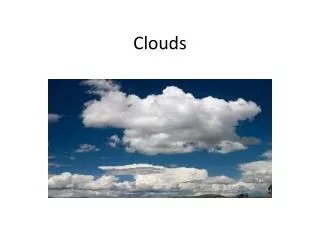
Cumulus • Fluffy, rounded piles of cotton • Low level • indicates fair weather
Stratus • Occurs in layers • Low level cloud • Some produce rain or snow • These clouds can produce fog.