Assignment for next Mon.
This assignment focuses on critical real estate concepts, particularly the mortgage crisis. Students are tasked with reading pages 39-50 from the prescribed materials and finding a relevant article discussing the mortgage crisis from various sources. Important topics include equity analysis, financing options such as fully amortized loans and ARMs, and steps in the buying process, including inspections, appraisals, and understanding purchase contracts. Engaging with these concepts will enhance comprehension of real estate principles and financing intricacies.

Assignment for next Mon.
E N D
Presentation Transcript
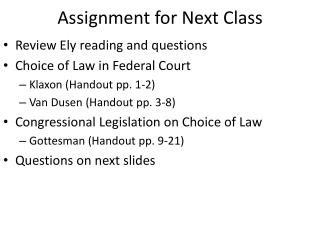
Assignment for next Mon. • Read pgs. 39-50 in materials. • Find an article on Explanation of the Mortgage Crisis on the web or in a magazine or newspaper. Read it and be ready to share!
Basic Real Estate Principles – cont. You want to buy an apartment complex….
Talked about the first thing you do • F • Important factors to consider?
Once you find the bldg. you want…. • What’s next? • Inspections • Financing • Title Report • Rent Rolls • Occupancy rate • Estoppel certificates
What gives buyer right to do these things? • PURCHASE CONTRACT: • Offer • Includes price • Financing terms • Inspection rights • Condition of title • Other terms? • Seller – accepts, rejects or most likely, ? • Counters
Terms • Equity • Examples: • Own my home - no mortgages. How much equity if the house has a Fair Market Value of $1 million? • Apartment building - FMV = $5 million. Seller has a loan on it = $3 million. How much equity? • Apt. bldg. FMV = $5 million. Loans against it for $6 million. Equity? Sellable? • Definition? • Advantages to having equity?
Terms • Leverage $100,000 cash in pocket. • Could buy 1 property with $100,000. Appreciates 10% in one year. Now worth $110,000. • Could buy 2 properties, each FMV = $100,000. $50,000 down, loan on each for $50,000. Each appreciates 10% in one year. How much have you made? [Remember though you make mortgage payments too.]
Definition of “Leverage” (modified from Investopedia) • Use of borrowed capital to increase the potential return of an investment.
Down payment • Define • Where does it come from? • Why does lender (generally) require buyer to put in $? • “Cushion” • Assume FMV = $500,000 • Assume Down Pymt. = $100,000 • Assume loan = $400,000 • How much would property have to depreciate before lender at risk?
Once “in contract”…. • Financing – What kind of loan? • List various possibilities: • Interest only: advantages? Disadvantages? • Fully amortized loan • ARM • 100+ variations
Found the loan you want…. • Bank – lender • What steps will (should) bank take (due diligence)? • Appraisal • Credit check • Verify employment/income • Verify other assets such as down pymt.
At closing (Close of Escrow) • First – • How does buyer get title? • Lender will require buyer/borrower to sign ? • What does the note include? • What does the mortgage do?
Property encumbered by a mortgage [Seller gets $ from buyer and lender – pays off loans.] Buyer signs promissory note in favor of lender secured by a mortgage on the bldg. Buyer gets title
Before getting into greater depth.. • Articles you found on real estate financing….
Promissory Note - pg. 33 • “jointly and severally” • What type of loan is this? How can you tell? • Prepayment • Acceleration • Due-On-Sale • Attorneys’ Fees • Security
And where did the process get off-track? Then we’ll examine why • Financing process – pg. 27 • Loan application • Loan analysis • Approval and processing • Closing • Servicing
Subprime Loans – pg. 34 • Application process: No documentation • Loan analysis – low credit scores; no verification • Higher interest rates • Negative amortization • Where does equity come into play? • “High debt-to-equity” ratio
Loan Analysis • Appraisal – what was happening in the mid-2000s? http://www.youtube.com/watch?v=MS5X8boUACI
Mortgages (called Deeds of Trust in some places) • Your understanding? • Why does lender require this? • Bought car on credit? • Can a property have more than one mortgage? • Why?
More than one mortgage… • Assume Buyer buying apt. house for $3 million. • Has $500,000 down. • Qualifies for $2 million loan from Bank – what security? • $500,000 short. • Solution? $500,000 down
Second mortgage [junior] • Goes to another lender – or even same lender • Why would someone lend additional $500k? • What would first mortgage holder allow this? • What is the cushion (margin of security) for 1st? FMV = $3,000,000 (purchase price) Down = 500,000 1st = $2,000,000 2nd = 500,000
Any cushion for 2nd[junior]? • FMV = $3,000,000 (purchase price) Down = 500,000 1st = $2,000,000 2nd = 500,000 Would 2nd be “safe”? What happens if property values decline?
Seller Carry-Backs • Assume same facts: • FMV = $3,000,000 • Down payment = $ 500,000 • 1st = $2,000,000 And buyer can’t find a lender to loan the rest but seller wants/needs to sell. Solution? How structured?
Term: “Under Water” • Assume FMV declines from $3,000,000 to $2,000,000. • First mortgage – balance of $2,000,000 • Second - balance of $ 500,000 How much would you pay for the property? In order to sell what has to happen?
Will discuss why borrowers defaulting – but let’s first look at the process • Foreclosure • What does this mean? • What gives lender the right? • And – what’s the process? • Same facts: • Value at time of default = $2,000,000 • 1st loan = $2,000,000 First forecloses; what is the highest bid?
Another Term: Deficiency Judgment Assume same facts Value = $2,000,000 at time of default 1st has balance due of $2,000,000 High bid = $1,500,000. Now what? And what about 2nd? (balance due = $500,000)