Transform Your Presentations: Pecha Kucha vs. Traditional Lectures
In this engaging session, Patricia Rand explores the transformative potential of the Pecha Kucha presentation style, highlighting why traditional lectures often fall flat. With insights drawn from notable design principles and cognitive science research, she illustrates how to enhance communication that drives action. Learn to create impactful visuals and storytelling techniques using the 20x20 method, where presenters show 20 slides for 20 seconds each. Discover the keys to a compelling presentation makeover that can captivate your audience and leave a lasting impression.


Transform Your Presentations: Pecha Kucha vs. Traditional Lectures
E N D
Presentation Transcript
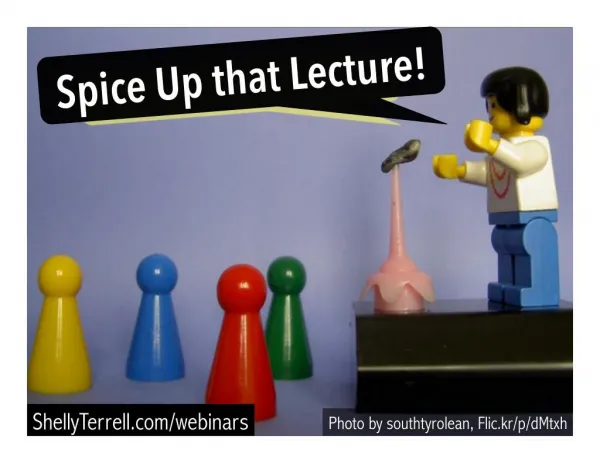
Spice it Up With Pecha Kucha by Patricia Rand
Bullet • Points • Kill • People
Stop Sign Characteristics • 75 mm across opposite sides of a red octagon • 20 mm white border • White uppercase letters are 25 cm tall • Reflective field and border • Previously were mounted 2-3 above the ground
Presentation Makeover Or, how I changed a sucky presentation into a pretty cool one…
References • Abela, A. (2008). Advanced presentations by design: Creating communications that drives action. San Francisco, CA: Pfeiffer. • Clark, R. and Mayer, R. (2008). eLearning and the Science of Instruction: Proven Guidelines for Consumers and Designers of Multimedia Learning. San Francisco, CO: Pfeiffer. • Duarte, N. (2008). slide:ology: The art and science of creating great presentations. Sebastopol, CA: O’Reilly Media, Inc. • Heath, C. and Heath, D. (2008). Made to Stick. Why Some Ideas Survive and Others Die. New York, NY: Random House. • Mayer, Richard E. (2003, April). The promise of multimedia learning: using the same instructional design methods across different media, Learning and Instruction, Volume 13, Issue 2, April 2003, Pages 125-139 • Mayer, R. E. (2001). Multimedia learning. Cambridge, England: Cambridge University Press. • Medina, J. (2008). Brain Rules: 12 principles for surviving and thriving at work, home, and school. Seattle, WA: Pear Press. • McNally, Terrance. “Corporate Storytelling.” Conference on World Affairs. University of Colorado. Boulder, CO. April, 2010. • Reynolds, G. (2007, April 30). Presentation Zen. Retrieved from http://www.presentationzen.com/presentionzen/2007/04/the_picture_sup.html. • Tufte, E. R. (2006). Beautiful Evidence. Cheshire, CT: Graphics Press, LLC. • Williams, R. (2004). The non-designer’s design book. Berkeley, CA: Peachpit Press.