
Mastering Shot Composition: An Overview of Basic Shots
E N D
Presentation Transcript
Shot Composition Introduction to Shot Selection
The Five Basic Shots • Extreme Long Shot • Long Shot • Medium Shot • Close Up • Extreme Close Up Zamore: Intro to Shot Composition
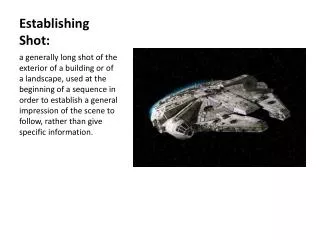
The Extreme Long Shot (XLS) • Also called Extreme Wide Shot (XWS) • Subject is small in the overall image • Establishes setting, emphasizes the background or for is used for dramatic effect/tone Zamore: Intro to Shot Composition
Think… • When should we use an XLS? • What mood might an XLS establish? Zamore: Intro to Shot Composition
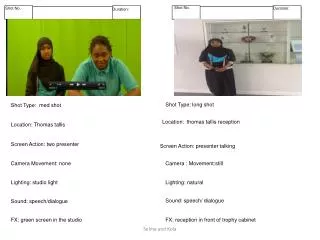
The Long Shot (LS) • Also called the Wide Shot • The whole subject is in frame, head to toe • Establishes specific character with the setting • Can be used for group shot to see interaction between characters Zamore: Intro to Shot Composition
Think… • When should we use a LS? • What specific types of scenes would benefit from this shot choice? Zamore: Intro to Shot Composition
The Medium Shot • Half of a subject’s body is in frame (waist up) • Viewer can identify body language and emotion • Good for framing conversations and establishing relationships between people • Involves viewer in the drama Zamore: Intro to Shot Composition
Think… • When should we use a MS? • What can we learn about a character(s) or a scene with a MS ? Zamore: Intro to Shot Composition
The Close Up • A subject’s face from the shoulders up • Establishes expression and details; emotion • Emphasis on subject • Viewer identifies and connects emotionally with subject Zamore: Intro to Shot Composition
Think… • When should we use a CU? • What can a CU achieve that a MS cannot? Zamore: Intro to Shot Composition
The Extreme Close Up • Subject full face or closer or close up on specific body part or object • Shows strong emotion, extreme details or reveals something to the viewer Zamore: Intro to Shot Composition
Think… • When should we use a XCU? • What can an XCU achieve that a CU cannot? Zamore: Intro to Shot Composition