Download
1 / 1
10 likes | 113 Views
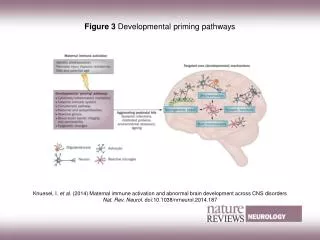
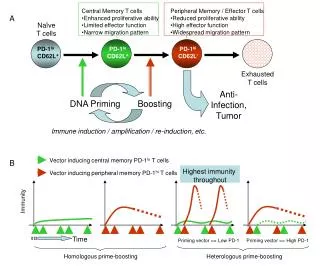
Explore the distinct characteristics of Central Memory T cells with enhanced proliferation but limited function and migration, compared to Peripheral Memory/Effector T cells with high function and widespread migration. The transition from Naïve T cells to Exhausted T cells is crucial in immune responses against infections and tumors. Strategies for boosting immunity through priming vectors and balancing PD-1 levels are discussed, including homologous and heterologous prime-boosting approaches. In-depth insights on immune induction, amplification, and re-induction processes are highlighted to achieve the highest immunity levels.

E N D
Central Memory T cells • Enhanced proliferative ability • Limited effector function • Narrow migration pattern • Peripheral Memory / Effector T cells • Reduced proliferative ability • High effector function • Widespread migration pattern A Naïve T cells PD-1lo CD62L+ PD-1lo CD62L+ PD-1hi CD62L- Exhausted T cells Anti- Infection, Tumor DNA Priming Boosting Immune induction / amplification / re-induction, etc. Vector inducing central memory PD-1lo T cells B Highest immunity throughout Vector inducing peripheral memory PD-1hi T cells Immunity Time Priming vector => Low PD-1 Priming vector => High PD-1 Homologous prime-boosting Heterologous prime-boosting