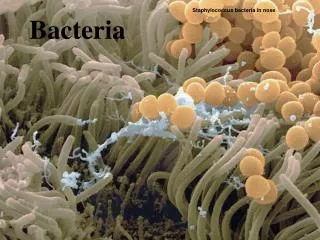
Bacteria
This guide explores the fascinating world of bacteria, highlighting the two major kingdoms: Eubacteria and Archaebacteria. Learn about their cell structures, shapes (like bacilli, cocci, and spirilla), and nutritional classifications (chemoheterotrophs, photoautotrophs). Discover the importance of bacteria in decomposition, nitrogen fixation, and human uses, including food production and waste digestion. We also address harmful bacteria, diseases they cause, methods of prevention like vaccinations and antibiotics, and the importance of hygiene in controlling bacterial spread.

Bacteria
E N D
Presentation Transcript
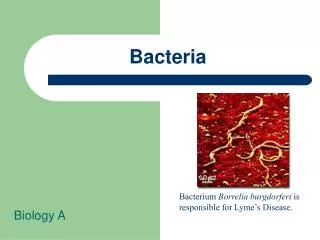
Bacteria Mika Hunter / Christenbury
Prokaryotes No membrane bound nucleus!
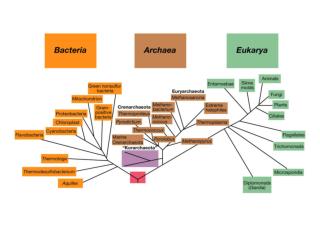
Eubacteria • Larger of the 2 Kingdoms • Cell walls that contain peptidoglycan • Live everywhere!
Archaebacteria • Cell wall does not contain peptidoglycans • Live in extremely harsh environments • DNA is similar to eukaryotes
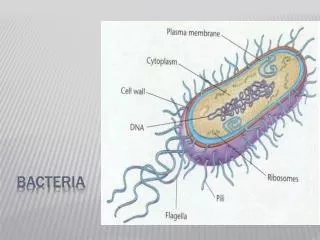
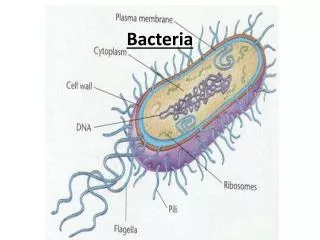
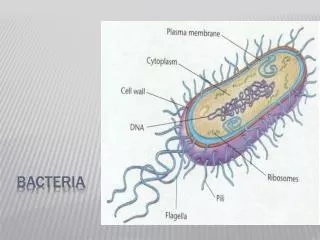
DNA (plasmid) Flagellum Cell membrane ribosomes Pili peptidoglycan Cell wall
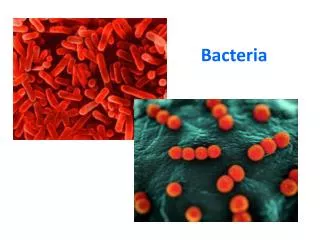
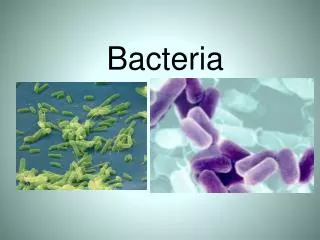
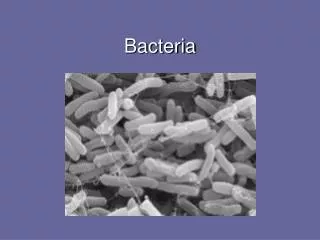
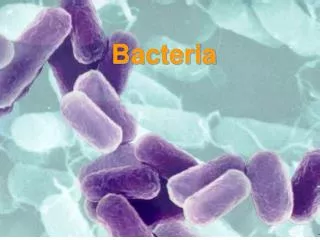
Bacteria Shapes • Bacilli - rod-shaped • Cocci - spherical • Spirilla - spiral
Heterotrophic Chemoheterotrophs - take in organic molecules Photoheterotrophs - use sunlight + organic molecules
Autotrophs • Chemoautotrophs - make organic molecules from CO2 - do not need light • Photoautotrophs - use light energy to make organic molecules (just like plants!)
Energy • Obligate aerobes - must have O2 • Obligate anaerobes - must NOT have O2 • Facultative anaerobes - with or without O2
How do bacteria reproduce? 1. Binary fission - doubles in size, replicates DNA, cell divides
Why are bacteria important? • Decomposition - break down materials into simple materials
2. Nitrogen fixation - converting N2 (gas) to a form plants can use
3. Human uses - - food production - digestion of wastes - vitamin production - production of hormones such as insulin
Bad Bacteria!Bacterial Diseases • Damage cells and tissues (use them for food) 2. Release toxins into blood stream
Preventing Disease • Vaccinations - weakened or killed pathogens • Antibiotics - block the growth and reproduction of bacteria
Controlling Bacteria • Sterilization • Disinfectants • Food storage and processes 4. Wash your hands!