Overview of Cellular Organelles and Their Functions: Mitochondria, Ribosomes, ER, and More
This article provides a comprehensive overview of major cellular organelles, including mitochondria, ribosomes, endoplasmic reticulum (ER), Golgi apparatus, lysosomes, peroxisomes, cytoskeleton, and others. It details their structures, such as double membranes and ribosomal granules, and their vital roles in protein synthesis, metabolism, detoxification, and cellular organization. The article emphasizes the importance of each organelle in maintaining cellular function and supports processes like cell division and DNA replication. Understanding these components is crucial for insights into cellular biology.

Overview of Cellular Organelles and Their Functions: Mitochondria, Ribosomes, ER, and More
E N D
Presentation Transcript
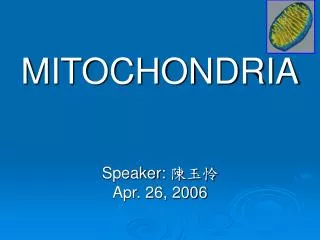
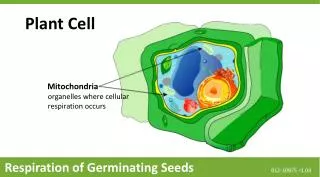
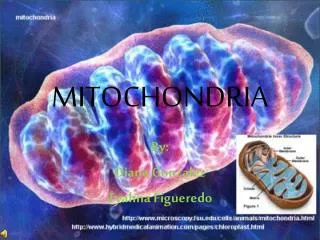
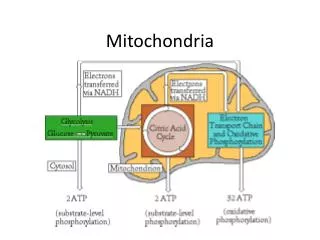
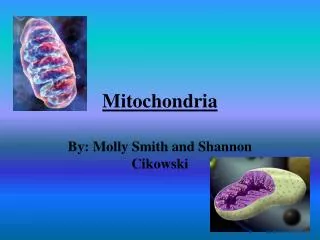
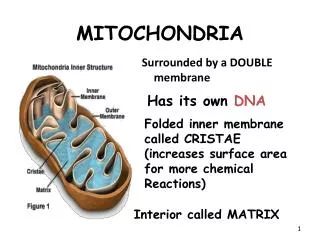
Mitochondria • Double membrane structure with shelf-like cristae
Ribosomes • Granules containing protein and _ • Site of _ • Free ribosomes synthesize _ • Membrane-bound ribosomes synthesize proteins to be _
Endoplasmic Reticulum (ER) • Interconnected tubes and parallel membranes enclosing cisternae • Continuous with the _ • Two varieties
Rough (ER) • External surface studded with ribosomes • Manufactures _ • Responsible for the synthesis of _
Smooth ER • Tubules arranged in a looping network • Catalyzes the following reactions in various organs of the body • In the liver • breakdown _ • detoxification of drugs • In the testes • synthesis of steroid-based hormones: _
Golgi Apparatus • Stacked and flattened membranous sacs • Functions in • Concentration • Transport vessels from the ER fuse with the cis face of the Golgi apparatus
Golgi Apparatus • Proteins then pass through the Golgi apparatus to the _ • Secretory vesicles leave the trans face of the Golgi stack and move to designated parts of the cell
Lysosomes • Spherical membranous bags _ • Digest ingested bacteria, viruses, and toxins • Degrade _ • Breakdown nonuseful tissue • Breakdown _ • Secretory lysosomes are found in _
Peroxisomes • Membranous sacs containing _ • _______________________________ harmful or toxic substances • Neutralize dangerous free radicals • Free radicals – highly reactive chemicals with unpaired electrons (i.e., O2–)
Cytoskeleton • The “skeleton” of the cell • ______________________________, elaborate series of rods running through the cytosol • Consists of _
Centrioles • Small barrel-shaped organelles located in the centrosome near the nucleus • Pinwheel array of nine triplets of microtubules • Form the bases _
Cilia • Whip-like, motile cellular extensions _
Nucleus • Contains _ • Gene-containing control center of the cell • Contains the genetic library with blueprints for nearly all cellular proteins • Dictates the _
Nuclear Envelope • _______________________________ double membrane barrier containing pores • Encloses jellylike _
Nuclear Envelope • Outer membrane is ______________________________________ and is studded with ribosomes • Inner membrane is lined with the nuclear lamina, • which _ • ______________________________________ regulates transport of large molecules into and out of the nucleus
Nucleoli • Dark-staining _ • Site of _
Chromatin • Threadlike strands of _ • Form condensed, barlike bodies of _
Cell Cycle • Growth (G1), synthesis (S), growth (G2) • Mitosis and cytokinesis
Interphase: DNA Replication • DNA helices begin unwinding from the nucleosomes • ________________________________ untwists the double helix and _ • Each nucleotide strand __________________________________ for building a new complementary strand
DNA Replication • uses _____________________________ to begin DNA synthesis • __________________________________ continues from the primer and adds complementary nucleotides to the template
DNA Replication • Since DNA polymerase only works _ • A continuous leading strand is synthesized • A discontinuous lagging strand is synthesized • ____________________________________ splices together the short segments of the discontinuous strand • Two new telomeres are also synthesized • This process is called _
Cell Division • Essential for body growth and tissue repair • Mitosis • Cytokinesis
Mitosis • The phases of mitosis are:
Cytokinesis • ________________________________ formed in ________________________________ by contractile ring • Cytoplasm is pinched into two parts after mitosis ends
Early and Late Prophase • Asters are seen as chromatin condenses into chromosomes • Centriole pairs separate and the _
Metaphase • Chromosomes _________________________________ of the cell with their centromeres aligned at the exact center, or equator, of the cell • This arrangement of chromosomes along a plane midway between the _
Anaphase • _______________________________ of the chromosomes split • Motor proteins in kinetochores _
Telophase and Cytokinesis • New sets of chromosomes _ • New ____________________________________ from the rough ER • Generally cytokinesis completes cell division
Control of Cell Division • Chemical signals such as growth factors and hormones • Cyclins and cyclin-dependent kinases (Cdks) complexes
Protein Synthesis • DNA serves as _____________________________ for protein synthesis • Genes are ___________________________________ carrying instructions for a polypeptide chain • Triplets of nucleotide bases form the genetic library • Each triplet specifies coding for an amino acid
Roles of the Three Types of RNA • carries the genetic information from DNA in the nucleus to the ribosomes in the cytoplasm • bound to amino acids base pair with the codons of mRNA at the ribosome to begin the process of protein synthesis • a structural component of ribosomes
Transcription • Transfer of information _
Transcription: RNA Polymerase • An enzyme that oversees the _ • _________________________________ the DNA template • Adds _ • Joins these RNA nucleotides together • Encodes a termination signal to stop transcription
Genetic Code • ______________________________ code for amino acids according to a genetic code
Information Transfer from DNA to RNA • ____________________________________ are transcribed into _________________________________by RNA polymerase • Codons base pair with ______________________________ at the ribosomes • Amino acids are ___________________________________ at the ribosomes to form polypeptide chains • _________________________________________________ are used in initiating and ending translation