Download

1 / 2
0 likes | 2 Views
<br><br><br>IntroductionMedical malpractice is a term that encompasses a variety of legal breaches within the healthcare system. It occurs when a healthcare professional fails to provide the standard level of care, resulting in harm to a patient

E N D
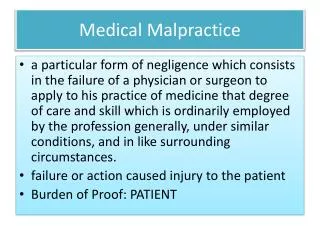
Introduction The field of medicine is continually evolving, heavily influenced by advancements in technology. As technology enhances patient care, it also transforms the landscape of medical malpractice cases. In this article, we will explore how various technological innovations impact medical malpractice litigation, improving error reduction, documentation, and legal processes. The Definition of Medical Malpractice Before delving deeper into the impact of technology on medical malpractice, it is essential to understand what constitutes medical malpractice. Medical malpractice occurs when a healthcare professional deviates from the standard of care in their field, leading to harm or injury to a patient. This can encompass various actions, including misdiagnosis, surgical errors, and inappropriate treatment. Technological Innovations in Healthcare Technological advancements have introduced significant changes to healthcare practices. Some notable innovations include: Electronic Health Records (EHRs): The transition from paper records to digital documentation has revolutionized how patient information is stored and shared.Telemedicine: Virtual consultations and remote monitoring tools have become increasingly popular, especially during the COVID-19 pandemic.Artificial Intelligence (AI): AI is increasingly being employed for diagnostics, treatment recommendations, and patient management.Wearable Technology: Devices like smartwatches enable continuous health monitoring, alerting patients and providers to potential health issues. How Technology Affects Medical Malpractice Cases Improved Documentation and Record-Keeping The advent of EHRs has ushered in a new era in healthcare documentation. With EHRs, medical professionals can easily access patient histories, medications, allergies, and treatment plans. This streamlined access to information is crucial in reducing instances of miscommunication and helps in establishing a clear chain of events if a malpractice suit arises. For example, if a patient is prescribed a medication that conflicts with their existing treatment, the electronic record can provide alerts to the healthcare provider, thus preventing potential harm. This capability also aids in collecting evidential data required in a malpractice case, as EHRs are often viewed as more reliable forms of documentation in court. Telemedicine and Its Challenges Telemedicine has dramatically expanded patient access to healthcare, particularly in rural areas. However, it also poses unique challenges regarding medical malpractice. One major concern is establishing the standard of care in virtual consultations. In a traditional doctor-patient interaction, the physical exam plays a significant role in diagnosis. In telemedicine, practitioners may not have the same level of access to the patient’s physical status. This limitation can lead to misdiagnoses or inadequate treatment plans, potentially increasing the risk of a malpractice claim. Case law regarding telemedicine is still developing, and practitioners must stay informed about legal standards and guidelines that govern virtual care. The Role of Artificial Intelligence AI has made significant strides in Surgical error lawyer diagnosing diseases, identifying risks, and suggesting treatments. However, the integration of AI into medical practice raises questions about liability. If an AI system suggests a treatment that results in patient harm, who is responsible? Is it the physician, the software developer, or the healthcare institution? For instance, an AI diagnostic tool may misidentify a patient’s illness, leading to incorrect treatment. In such cases, determining liability becomes complex. Legal frameworks are likely to evolve to address these concerns, but currently,
the intersection of AI and malpractice liability presents a grey area for many healthcare providers. Challenges in Proving Malpractice As technology changes the medical landscape, it also affects how medical malpractice is proven in court. Key challenges include: Complex Medical Technology Proving malpractice requires a clear understanding of medical technology and standards of care. Jurors may find it challenging to comprehend the intricacies of advanced medical technologies such as robotic surgery systems, which can lead to misconceptions about whether a physician acted negligently. Expert Testimony Expert witnesses are crucial in malpractice cases, as they help establish the standard of care. However, as technology advances, finding qualified experts who understand both the medical protocols and the technological aspects can be more complex. Judges may face difficulties in adequately vetting the qualifications of these experts. Technological Solutions for Legal Processes Technology streamlines legal processes surrounding medical malpractice cases, offering several advantages: Case Management Software: Legal teams can utilize sophisticated case management systems to streamline document sharing, deadlines, and task assignments, which enhances overall productivity.Digital Evidence Presentation: In court, attorneys can use technological tools to present evidence more effectively, utilizing visual aids or simulations that can help jurors understand complicated medical procedures. Conclusion In conclusion, the impact of technology on medical malpractice cases is profound and multifaceted. While advancements in technology can enhance patient care and improve documentation, they also introduce new complications in establishing standards of care and determining liability. As the healthcare landscape continues to evolve, so too will the legal ramifications surrounding medical malpractice. It is imperative for healthcare professionals to stay informed about these changes and for legal experts to adapt to the technological innovations shaping the future of legal advice resources for medical malpractice medical practice.