Download
1 / 41
410 likes | 698 Views
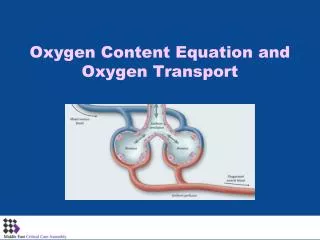
Learning Objectives. Oxygen and aerationOzone as a disinfectant.. Aeration. Most aquatic systems employ some means of oxygenating holding tanksSource can be purified O2 or ambient air, depending upon needsTypically a three-step proces:transfer of O2 in gaseous form to the gas-liquid interfacetransfer across the gas-liquid interfacetransfer away from the interface into the liquid .

E N D
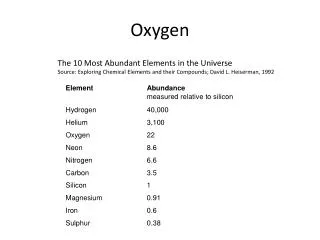
1. Oxygen Issues Dr. Joe M. Fox
MARI-5432
2. Learning Objectives Oxygen and aeration
Ozone as a disinfectant.
3. Aeration Most aquatic systems employ some means of oxygenating holding tanks
Source can be purified O2 or ambient air, depending upon needs
Typically a three-step proces:
transfer of O2 in gaseous form to the gas-liquid interface
transfer across the gas-liquid interface
transfer away from the interface into the liquid
4. Aeration Step 1 is accomplished by a combination of diffusion and convective currents in the gas, rapid process.
Step 2 (transfer across interface) is a matter of diffusion, slow rate-limiting process.
Step 3 (movement of oxygen into the liquid) is accomplished by convection.
dC/dt = KL (A/V)(Cs – C)
where KL = oxygen transfer coefficient (cm/h), A = area of gas-liquid interface (cm2), V = volume of water (cm3), Cs = saturation concentration of oxygen in liquid, C = oxygen concentration in liquid at any point in time.
5. Diffusion Increased temperature = increased diffusion rate
Dirty water, water with chemicals tends to reduce KL (transfer coefficient)
As A/V increases, diffusion rate increases
(Kl)(A/V) increases 1.56% for each degree C increase in water temp
6. Aerator Types Four basic types: gravity, surface, diffuser, turbine
Aerators use an energy input to increase the liquid surface area available for oxygen transfer or to ensure that low DO water is brought into contact with oxygen
Mixing increases surface area and concentration gradient ? transfer
Also used to keep suspended particles in suspension.
7. Gravity Aerators Utilize the energy released when water loses altitude to increase air-water surface area, increasing DO concentration.
Turbulent motion of streams, waterfalls achieves this effect.
Used in large applications, tanks at different levels, weirs situated on ponds, raceways, etc.
E = 100 (Cb – Ca)/(Cs – Ca)
E = aeration effectiveness (%), Ca = DO conc above aerator (mg/L), Cb = DO conc below aerator (mg/L), Cs = saturation DO conc at given temp (mg/L)
9. Lattice Aerators Lattice aerators (same as trickling filters) have greatest efficiency
Benefit: no energy other than gravity
Spaces between trays, media type are critical
Increased space between trays = increased efficiency to a point
10. Surface Aerators Agitate or break-up water surface resulting in larger oxygen transfer rates
Examples: pump spraying water into the air, nozzle aerators
11. Transfer Rate Depends on: depth of submergence
rotor speed
rotor diameter
power input per unit area or volume
characteristics of liquid being aerated
liquid tank dimensions, shape
oxygen concentration gradient
aerator design
12. Diffuser Aerators inject air or oxygen into a body of water in the form of bubbles
oxygen transfer from bubbles to water via diffusion
bubbles rise in water column
bubble size very important (smaller diameter is better)
size of bubble determined by diffuser
13. Diffuser Aerators Oxygen transfer depends on oxygen concentration gradient between bubble and surrounding liquid, percentage saturation of water around bubble, retention time of bubbles in water, bubble size, gas flow rate
14. U-tube Diffusers Consists of a U-shaped tube in which water travels down one leg of the U and up and out the other
Air or pure oxygen is injected into the water through a diffuser at the inlet
Downward water velocity >>> rise velocity
increased gas/water contact time
increases saturation constant due to higher pressure at the bottom
15. U-tube Aerators DOo = 20 + 0.76(DO)t + 295(AWR) + 0.14d – 2.50(DO)i(AWR)
DOo = DO at U-tube outlet (% sat), DOi = DO at U-tube inlet (% sat), AWR = air-water ratio as a decimal fraction, d = U-tube depth
16. AERATION DISTRIBUTION SYSTEM Aeration typically provided via large impeller-type blowers
Blowers located distant from aquatic system due to noise/vibration
Distribution system relatively similar to that of seawater system, but has to deal with condensation
Incoming air is filtered to 1 µM via intake filters (prior to blower)
Air from blower is often hot due to back pressure (cooled via immersion into water)
17. AERATION DISTRIBUTION SYSTEM Pipe extending from blowers is often constructed of metal due to high heat
Ozone can be injected into pneumatic flow for disinfection of distribution lines or for in-tank treatment
Aeration diffusion is typically via airstones or microbubble diffusors (e.g., plastipore tubing, Schramm Bioweave)
Very little hatchery aeration is via compressor due to large volume required
18. Calculating Aeration Required Most aquatic systems operate with shallow-depth tanks
Pressure requirement is small, but volume requirement is large
Pressure typically recorded in psi (lbs. per square inch) and volume in cubic ft (cf)
Flow rate is measured in cfs for most blower installations
19. Which Delivery System is Best? Difference between delivery systems is primarily a function of pressure
Step 1: identify pressure required
Depends on water pressure at depth of diffusor, piping/tubing friction loss and diffusor resistance to air flow
For example: if most tanks in your hatchery are 36” deep (36 x .04 = 1.44 psi), your distribution pipes are low-restriction (total 0.15 psi) and your air diffusors are low-resistance (0.25 psi), total pressure needed is less than 2 psi.
Note: most blowers operate efficiently up to 4 psi (this is the system you need!)
20. Aeration Criteria for Aquatic Systems Step 2: what is the total air flow you need?
Most hatcheries use airstones as diffusors
Most diffusors require about 0.5 cfm flow rate at most system water depths (cfm increases with decreased pore size)
With 500 airstones (possible) in a system, you could need 500 cfm at 2 psi
This equates to two 10 hp blower running simultaneously!
22. Oxygen and Model Ecosystems Most aquatic organisms require an oxygenated environment
Some submerged aquatic plants can actually store oxygen in their tissues
Very simple organisms (e.g., bacteria) will remove oxygen from the water directly through the cell wall
Others (e.g., fish) have specialized organs and blood pigments for carrying oxygen
Those adapted to an anaerobic environment include yeasts, protozoans, fungi (what you don't want)
Hence, the need for aeration or oxygenation in aquatic systems
23. Oxygen and Model Ecosystems In microcosms and mesocosms where all aspects of the environment are simulated, adequate light for photosynthesis is provided in order to generate baseline levels of oxygen.
In aquaria, managers often attempt to maximize equivalence between conditions in the natural environment and the aquarium
Difficulty: scaling and inadequate ratios between water surface and water volume don't allow this
In aquaria, display is optimized—volume is small and biomass density is high.
Feeding is typically in excess of wild equivalents
Hard to simulate an adequate oxygen environment by simple aeration.
24. Oxygen and Model Ecosystems Newer methods of trickle filtration certainly help, but concomitantly prevent supersaturation.
Can be achieved using liquid or bottled O2, but this approach is expensive and potentially dangerous.
Model ecosystems are, thus, typically designed to optimize photosynthesis.
25. Simulating Nature Most natural reef systems achieve supersaturation on a daily basis
Due to excess photosynthesis and wave action
Source of water is also typically at oxygen saturation (approx. 6.5 mg/L)
Waves smooth out metabolic activity highs and lows
Aquarists simulate this environment by maintaining a night-to-day D.O. range of 5.5 - 8.5 mg/L
26. Simulating Nature In order to evaluate oxygen concentration in the aquarium system during the dark
Measurement made at or near saturation to reduce influence of exchange with the atmosphere
Respiration rate averages about 2 g O2/m2/hr in aquaria, only about 50% of a natural reef!
At higher respiration rates, you must elevate photosynthesis to avoid increases in CO2
High CO2 depresses pH, reducing carbonate formation
27. Simulating Nature Shallow reef aquarium simulations should be supersatured for 8-10 hr/day
Example: Starting with an ambient DO concentration of 6.5 mg/L, a 60-gal aquarium with 0.5 m2 reef surface area having a dark consumption rate of 3 g O2/h would have all of its oxygen consumed in one hour!
Situation mitigated by wave action bubbling or use of a trickling filter.
28. Preliminary Ozone Notes Pungent and unstable gas.
Tri-molecular oxygen.
Most common use as disinfectant.
Oxidizer: remove turbidity, algae, color, odor and taste.
Has industrial and aquaculture uses.
Aquaculture: both recirc and flow-through applications.
Remove disease, dissolved/suspended organic compounds.
Treatment prior to discharge.
29. Ozone Chemical Properties
31. Ozone Chemical Properties Ozone inorganic conversions:
- Sulfides and Sulfites to Sulfates
- Nitrites to Nitrates
- Chlorides to Chlorine
- Ferrous to Manganous ions to their insoluble ionic forms resulting in precipitates.
Ozone organic conversions:
- Rupturing compounds at unsaturated bonds and destroying humic acids, pesticides, phenols, and a host of other types of compounds.
32. Ozone Chemical Properties As a strong oxidant, it is very unstable in both gaseous and aqueous forms.
Decomposition in water is a function of pH, ultraviolet light, ozone concentrations, presence of inhibiting compounds.
Very rapid decomposition to superoxide anion (O2-) in presence of hydroxide ions, peroxides, humics.
33. Ozone Chemical Properties Can react directly with ammonia to form nitrate, but at a very slow rate.
Other break-down chemicals react faster.
Treatment design should therefore favor formation of radicals.
34. Ozone Oxidizing Potential Bacterial disinfection.
Viral inactivation.
Precipitation of metals (Fe, Mn).
Decomplexing organically-bound heavy metals.
Flocculent for precipitation of dissolved organics
Taste, odor, color, algae control.
Destruction inorganics (sulfides, nitrites).
Degradation of pesticides, detergents.
Nitrification enhancement.
35. Ozone Use Characteristics Powerful oxidizing agent.
Very rapid reaction times.
3-5 x more effective as a disinfectant than chlorine.
Short contact times.
Complete reaction w/residual half-life of 20-30 min.
Residual is oxygen (beneficial).
Other residuals easily removed.
36. Major Disadvantages High capital equipment costs.
High operating costs (corona discharge)
Some residuals can be toxic to fish/shrimp.
Dangerous to humans to breathe.
On-site generation required.
Inefficient energy: only 10% of power required generates ozone (rest is heat).
37. Ozone as a Disinfectant Usually applied at end of water treatment process.
Remove most demand first by mechanical means and then apply O3.
0.4 mg/L residual kills 99.9% bacteria in drinking water in less than 4 min.
Wastewaters have higher ozone demand = more difficulty establishing a residual.
38. Ozone Generation Usually by either corona discharge (electrical spark) or by low wavelength UV.
Cannot be stored (pressure = heat = dissociation.
Corona: passing dry air or oxygen between two surfaces having an electric potential.
As oxygen passes through field, it is excited to energy level conducive to formation of ozone.
39. O3 Corona Discharge Feed gas must be dry, free of impurities (e.g., N2 in feed = nitric acid).
Pure O2 = 2x more O3 than ambient air.
Factors affecting output: frequency of electricity, concentration of O2 in feed gas, gap between plates, plate thickness.
Air as feed: 60 g O3/kWh.
Oxygen as feed: 120 g O3/kWh.
40. UV Ozone Generation Exposure of air or oxygen to UV light at 140 - 190 nm.
Factors: voltage, lamp glass quality, gas used in packing lamp.
Problems: cost of lamps, cheap knock-offs, health hazards.
Cheap models: 1/3 O3/kWh of corona, poor lamp life.
Good models: equal, but less electrical cost, 3 yr lamp life.
41. Ozone Toxicity Mutagen, oxidizing compound.
Humans should avoid exposure to concentrations in air of more than 0.3 mg/L.
For most species: 0.5 mg/L achieves good water quality, but high mortality of eggs and larvae (fish, bivalves).
0.1 mg/L residual had no effect on cutthroat and steelhead trout fry (Colberg et al., 1977).
42. Ozone Toxicity Toxicity may be a function of organic material on gills.
Susceptibility largely result of activated species present.
Some decomposition products are toxic.
Check out situation first with bioassay.