Advancements in Physics Education Research: Understanding and Improving Student Learning
This presentation summarizes key findings from Physics Education Research (PER) at CU Boulder, focusing on the impacts of innovative instructional strategies on student learning. The session covers theoretical models, educational practices, and longitudinal studies that demonstrate how students learn physics. It explores how PER informs teacher recruitment and preparation, alongside comparative analyses of learning gains in traditional vs. interactive engagement settings. The collaboration among faculty, postdocs, and staff emphasizes the importance of ongoing research and development in effective physics education practices.

Advancements in Physics Education Research: Understanding and Improving Student Learning
E N D
Presentation Transcript
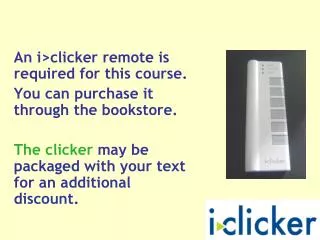
Press and hold power button – it should flash greenEnter “AA” Is your clicker working? • Yes • No (!?) Please return your clicker at the end!! If the power doesn’t come on – try pulling the battery tab
Understanding Educational Reforms: Impacts of Physics Education Research Steven Pollock Dep’t of Physics, CU Boulder COLTT 2014
Physics Education Research at CU Boulder Postdocs/ Scientists: Stephanie Chasteen Karina Hensberry Katie Hinko Emily Moore* Ariel Paul Qing Ryan Joel Corbo Daniel Reinholtz Faculty: Melissa Dancy Michael Dubson Noah Finkelstein Heather Lewandowski Valerie Otero Robert Parson Kathy Perkins Steven Pollock Carl Wieman* Teachers / Partners / Staff: Shelly Belleau, John Blanco Kathy Dessau,Jackie Elser Kate Kidder, Sam Reid Trish Loeblein, Chris Malley Susan M. Nicholson-Dykstra Oliver Nix, Jon Olson Sara Severance Grad Students: Ian Her Many Horses Mike Ross Enrique Suarez Ben Van Dusen Bethany Wilcox Simone Hyater-Adams Rosemary Wulf Jessica Hoy +recent grads (4 PhD) + many participating faculty and LAs Funded by: National Science Foundation William and Flora Hewlett Foundation American Association of Physics Teachers Physics Teacher Education Coalition American Institute of Physics American Physical Society National Math & Science Initiative Howard Hughes Medical Institute
Outline / Framing • Brief overview of why, what, and how of PER • Building on a base • Theoretical models & educational practices • Impacts • Introductory physics (results, replicability) • Longitudinal study • K12 teacher recruitment and prep • Upper division
Press and hold power button – it should flash greenEnter “AA” What is your primary scholarly identity? • STM (Science, Technology, Math) • Engineering • Humanities • Fine Arts • Other…. (or more than one)
What is Physics Education Research? Studies by physicists of:
What is Physics Education Research? Studies by physicists of: • How do students learn?
What is Physics Education Research? Studies by physicists of: • How do students learn? • How do we know they’re learning?
What is Physics Education Research? Studies by physicists of: • How do students learn? • How do we know they’re learning? • How do we help them learn?
What is Physics Education Research? Studies by physicists of: • How do students learn? • How do we know they’re learning? • How do we help them learn? Theory
What is Physics Education Research? Studies by physicists of: • How do students learn? • How do we know they’re learning? • How do we help them learn? Theory Experiment
What is Physics Education Research? Studies by physicists of: • How do students learn? • How do we know they’re learning? • How do we help them learn? Theory Experiment Application
How hard was that question? (For CU algebra-based students) Very easy Easy Moderate/Difficult Very difficult How could I know this?
Force Concept Inventory Learning gains traditional lecture Less Learning <g> More Learning R. Hake, ”…A six-thousand-student survey…” AJP 66, 64-74 (‘98).
Force Concept Inventory (FCI) Learning gains traditional lecture Students are learning ~ ¼ of what they didn’t already know! Less Learning <g> More Learning R. Hake, ”…A six-thousand-student survey…” AJP 66, 64-74 (‘98).
2000 years ago Built in to our classes?
Conventional model of teaching and learning: “transmitting knowledge” => lecture (efficient!)
FCI Learning gains interactive engagement traditional lecture Less Learning <g> More Learning R. Hake, ”…A six-thousand-student survey…” AJP 66, 64-74 (‘98).
FCI/FMCE Learning gains interactive engagement traditional lecture CU for last 18 semesters Less Learning <g> More Learning S. Pollock and N. Finkelstein, Phys. Rev. ST Phys. Educ. Res. 4, 010110 (2008)
FCI/FMCE Learning gains interactive engagement traditional lecture Clickers in lecture, Traditional Recitation at CU Less Learning <g> More Learning S. Pollock and N. Finkelstein, Phys. Rev. ST Phys. Educ. Res. 4, 010110 (2008)
FCI/FMCE Learning gains interactive engagement traditional lecture With Tutorials and LAs Less Learning <g> More Learning S. Pollock and N. Finkelstein, Phys. Rev. ST Phys. Educ. Res. 4, 010110 (2008)
Suppose you could improve student performance on such measures (like the FCI) – should you? Of course. And, at any cost! Sure – if the cost is low enough* It really should be up to departments It really should be up to individual faculty I don’t fit in any of these bins!!
PER curricular innovations ScaleUP Studio
Tutorials in Introductory Physics • ReconceptualizeRecitations • Materials • Classroom format / interaction • Instructional Role L. McDermott et al, University of Washington
TA (post) TA (pre) LA (pre) NCSU honors NCSU post 1120 BEMA pre/post Pre Post LA (post)
Upper-Level Course Transformation Longitudinal Upper division majors’ BEMA scores After upper div. E&M. (Only students who took intro without Tutorials) S. Pollock, 2007 PERC, and Phys. Rev STPER 5 (2009)
Upper-Level Course Transformation Longitudinal Upper division majors’ BEMA scores BLUE: students who took freshman E&M with Tutorials S. Pollock, 2007 PERC, and Phys. Rev STPER 5 (2009)
Upper-Level Course Transformation Longitudinal (3.2) Grade in course (3.3 ±.1) (3.0 ±.1) (3.1 ±.1) Upper division majors’ BEMA scores Yellow: students who had been E&M LAs S. Pollock, 2007 PERC, and Phys. Rev STPER 5 (2009)
Faculty & Staff Model of Course Transformation • Chasteen, Perkins, Beale, Pollock, & Wieman, JCST 40 (4), 70, 2011Chasteen et al., AJP 80, 923, 2012, PRSTPER 8 020108, 2012
Faculty & Staff Model of Course Transformation Establish learning goals • Chasteen, Perkins, Beale, Pollock, & Wieman, JCST 40 (4), 70, 2011Chasteen et al., AJP 80, 923, 2012, PRSTPER 8 020108, 2012
Faculty & Staff Model of Course Transformation Establish learning goals Using Research & Assessment • Chasteen, Perkins, Beale, Pollock, & Wieman, JCST 40 (4), 70, 2011Chasteen et al., AJP 80, 923, 2012, PRSTPER 8 020108, 2012
Faculty & Staff Model of Course Transformation Establish learning goals Using Research & Assessment Apply research-based teaching techniques & measure progress • Chasteen, Perkins, Beale, Pollock, & Wieman, JCST 40 (4), 70, 2011Chasteen et al., AJP 80, 923, 2012, PRSTPER 8 020108, 2012
Focus on student understanding Courtesy M. Dubson
Focus on student understanding Courtesy M. Dubson
Upper-division conceptual test (CUE) score distribution traditional lecture Ntot=540 at 5 Universities
Upper-division conceptual test (CUE) score distribution traditional lecture interactive engagement Ntot=540 at 5 Universities, (18 classes)
Upper-div Clickers at CU 04 05 06 07 08 09 10 11 Perkins et al, PERC 2009
Upper-Level Course Transformation Upper-div Clickers at CU 04 05 06 07 08 09 10 11 PER faculty
Upper-div Clickers at CU 04 05 06 07 08 09 10 11 PER faculty
Summary • We must know our audience.
Summary • We must know our audience. • Student attitudes and beliefs • are important
Summary • We must know our audience. • Student attitudes and beliefs • are important • Active learning works!
Summary • We must know our audience. • Student attitudes and beliefs • are important • Active learning works! • Conceptual understanding • doesn’t come along for free