Download

1 / 7
70 likes | 177 Views
Learn how enzymes EcoR1 and HindIII cut DNA to create unique patterns for identifying criminals in forensic investigations. Use gel electrophoresis to graph DNA segments. Follow steps to match suspects' DNA fragments with crime scene evidence to solve the case. Enhance your understanding of genetic analysis in criminal investigations.

E N D
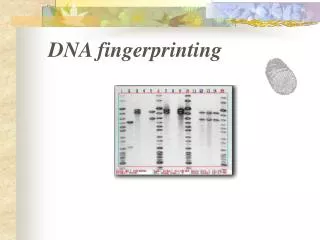
Enzymes • Enzymes are proteins that are used for a specific job in a cell. • The enzymes used to make a DNA Fingerprint cut DNA bases in a specific spot. • The DNA is then run through a magnetic set-up called gel electrophoresis which separates and graphs the DNA by how long the segments are.
For the crime: • We will use the enzymes EcoR1 and HindIII • One of you choose EcoR1 and one choose HindIII…write the choice at the top of your paper • EcoR1: will break the DNA between the bases G/AATTC • Hind III: Will break the DNA between the bases A/AGCTT
Now that you have made the breaks, count the # of bases between each one. • For example: • TTACGTAGAATTCCCGAATTCATCGG
We will graph each of the pieces of Dna: • A line represents each segment of DNA
Next you need to combine the breaks of EcoR1 and HindIII to break the DNA into smaller yet fragments. • On the new paper, recopy your breaks from EcoR1… • Pass to your partner for HindIII • This will make smaller fragments.
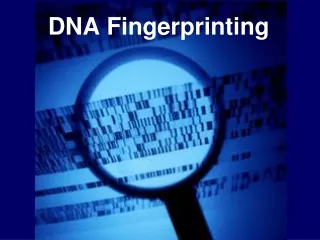
Graph the combined breaks on the appropriate graph. • Whichever suspects matches these breaks is the criminal. • Criminal investigators will get the picture (similar to the graphs you just made) to determine who committed the crime.