Enhancing Literacy Skills Through Experiential Learning with Adjectives
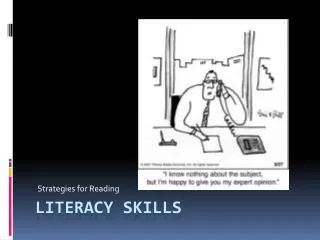
This program aims to develop literacy skills by linking experiences to appropriate adjectives. Students will identify adjectives from a curated list, including terms like hard, rough, warm, and cuddly, among others. Drawing from David Kolb's experiential learning model, the activity engages learners through concrete experiences and reflective observations, promoting understanding and retention. Tailored for visual and kinesthetic learners, this approach fosters a deeper connection between objects and their descriptions, ensuring students who struggle with traditional learning methods can effectively grasp and apply new vocabulary.

Enhancing Literacy Skills Through Experiential Learning with Adjectives
E N D
Presentation Transcript
AimTo develop literacy skills Objectives Link experience to adjective Identify the appropriate adjective from a given list
Adjectives/Ansoddair • Hard - Caled • Rough - • Warm - Cynnes • Fluffy - ?? • Mushy - ?? • Cuddly - Meddal • Woolly - Gwlanog • Coarse - Bras • Mouldable - Fowldio • Delicate - Bregus • Squishy - ?? • Moist - Llaith • Firm - Cadarn • Stiff - ?? Soft - Meddal Smooth - Llyfn Cold - Oer Wet - Gwlyb Grainy - Granular - Gronynnog Dusty - Llychlyd Crumbly - Friwsionllyd Sticky - Gludiog Gooey – Stomplyd Gloop - ?? Tacky - ?? Gummy - ??
Why? • Programme for International Student Assessment (Pisa) league table. • Estyn Framework • Education Minister Leighton Andrews four year plan
David Kolb on experiential learning • Concrete Experience - (CE) • Reflective Observation - (RO) • Abstract Conceptualization - (AC) • Active Experimentation - (AE)
Fleming’s VARK model • Kinesthetic learning style – natural discovery learners. • The feel of the objects will aid the students understanding of adjectives. • Good for students who struggle to learn via reading and listening. • Activity also leans towards visual learning. • Visual learners have a preference for seeing. • Seeing the object, and making the connection between the object and it’s description will consolidate learning
Experiential Learning • Tell me, and I will forget; show me, and I may remember; involve me, and I will understand - Confucius • The things we have to learn before we do them, we learn by doing them.- Aristotle
Gestalt • The whole is greater than the sum of its parts. In viewing the “whole,” a cognitive process takes place –the mind makes a leap from comprehending the parts to realizing the whole. • To generate productive thinking, students should arrange and rearrange the problem in many ways until the solution emerges based on understanding. • Eureka moment!