Religion, Art, and Society in Medieval Japan: Exploring Shinto, Buddhism, and Gender Dynamics
This section delves into the unique characteristics of Shinto and Buddhism in medieval Japan, highlighting how each religion addressed different societal needs. Shinto focused on everyday life, while Buddhism prepared individuals for the afterlife. The traditional Noh plays, Japan's oldest theatrical form, showcased a blend of acting, music, and dance, albeit perceived as dull by some. Additionally, the role of guilds in supporting artisans and the impact of a male-dominated warrior society on women's freedoms are discussed, providing insights into the complexities of this historical period.

Religion, Art, and Society in Medieval Japan: Exploring Shinto, Buddhism, and Gender Dynamics
E N D
Presentation Transcript
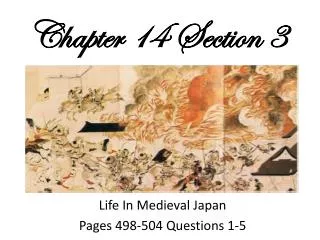
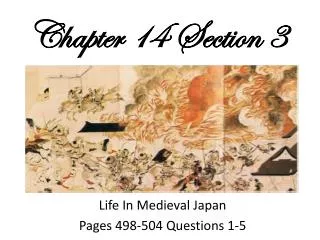
Chapter 14 Section 3 Life In Medieval Japan Pages 498-504 Questions 1-5
1. How did Shinto and Buddhist religions meet different needs in Japan? • Shinto was concerned with daily everyday life, while Buddhism got one ready for the afterlife or the life to come.
2. What were Noh plays, and how were they performed? • Noh Plays are Japan’s oldest form of acting and entertainment. It is on a bare stage, actors wear mask and ornate robes, dance and chant poetry. • Very Boring
3. Show the characteristics of Pure Land Buddhism and Zen Buddhism?
4. How did guilds benefit artisans and Daimyos? • Guilds offered protection from rival artisans and sold daimyos goods they could not get themselves?
5. Why do you think women lost some of their freedoms when Japan became a Warrior Society? • Japan was a male dominated society so when they became a warrior society the Male Chauvinism rose placing women under tighter restrictions.