Effective Job Design: Strategies for Motivation and Team Success
100 likes | 234 Views
This document explores the crucial process of job design, highlighting how the content of a job interacts with other positions and employees. It emphasizes the role of job analysis in defining tasks, responsibilities, and necessary personal attributes to motivate and retain employees while achieving business goals. Key factors for fostering motivation include autonomy, clear expectations, training, competence, and constructive feedback. Additionally, we discuss specialized job design and its impact on productivity, output, and employee engagement, while also addressing potential drawbacks.


Effective Job Design: Strategies for Motivation and Team Success
E N D
Presentation Transcript
JOB Design Nick Bowman, AryDwiputra, Vishay Pratap, IenashRasheed
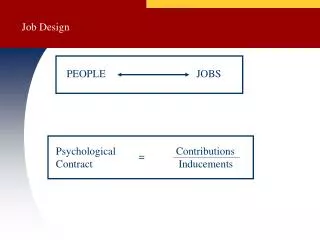
introduction • The process of designing the content of a job and how it will interact with other jobs and employees • To motivate and retain an employee and achieve the business’s goals • Dependent on job analysis, which is a detailed analysis of all tasks, responsibilities, personal attributes and reporting relationships needed in a position
Introduction • Employees more motivated and likely to share ideas if they have • Autonomy • Know what they have to do • Well trained • Feel competent • Receive feedback and develop further • Feedback: • Demotivating – when it is controlling • Motivating – when it is informative and constructive
Specialized Job design • Specialization: Involves jobs being broken down into specialist skills • ↑ knowledge & skills, ↑ output, ↓ labor costs & errors • Control quality • More repetitious and boring, employees have little input, ↓ social interaction, sharing of ideas
Question • What are the steps involved in effective job design?
THE END • :~~~))