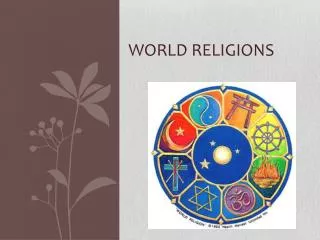
World Religions
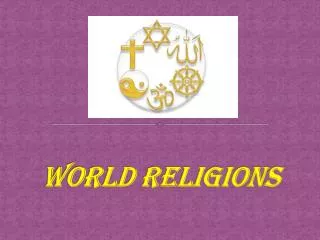
This overview explores five major world religions: Buddhism, Hinduism, Judaism, Christianity, and Islam. Discover Buddhism's path to enlightenment through the teachings of Siddhartha Gautama and the Four Noble Truths. Learn about Hinduism's polytheistic beliefs and the significance of Brahman and the cycle of reincarnation. Examine Judaism's covenant with God and the importance of the Torah. Understand Christianity through the life of Jesus Christ and the Holy Trinity. Finally, delve into Islam and the teachings of Muhammad as captured in the Qur'an.

World Religions
E N D
Presentation Transcript
Buddhism • Founder: Siddhartha Gautama • Sought to find a release from suffering • Buddha “ The Enlightened One” • Enlightenment: A state of perfect wisdom in which one understands basic truths about the universe. • Nirvana: Release from selfishness and pain • The Path to Enlightenment: • The Four Noble Truths • Life is filled with suffering and sorrow • The cause of all suffering is people’s selfish desire for the temporary pleasures of the world • The way to end all suffering is to end all desire. • The way to overcome such desires and attain enlightenment is to follow the Eightfold Path. • The Eightfold Path (Middle Way) • Right Views • Right Resolve • Right Speech • Right Conduct • Right Livelihood • Right Effort • Right Mindfulness • Right Concentration • Belief in Reincarnation • Religious Leaders: Monks and Nuns
Hinduism • Polytheistic: Gods represent different forms of Brahman • Brahma: The Creator • Vishnu: The Preserver • Siva: The Destroyer • Beliefs: • People reach true enlightenment and happiness after they free themselves from their earthly desires. • Enlightenment: achieved through worship, attainment of knowledge, lifetime of virtuous acts. • Reincarnation: the atman (soul) is born in another being after death. • The Atman (soul) may progress up or down from plants to animals based on good or bad Karma (Actions) and Dharma (living the right way). • When the Atman (soul) becomes completely pure, it can leave the cycle of rebirth and return to Brahman. • Sacred Texts: • The Vedas • The Upanishads • The BhagavadGita • Religious Leaders: Guru, Holy Man, Brahmin Priest
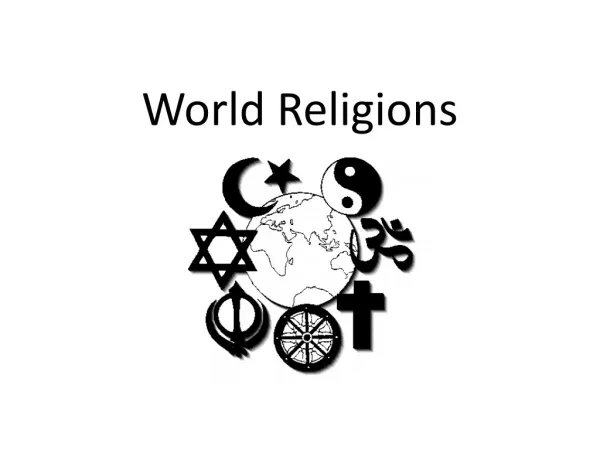
Daoism (Taoism) • Founder: Laozi • Sacred Text: Dao De Jing • Symbol: Yin and Yang • Unseen forces found in everything, balance each other harmoniously. • Beliefs: • Dao: “the way” a universal force, guides all things • Nature is more important than social order • People should live a simple life close to nature, reflect on the Dao to keep harmony, this eventually leads to a perfect balance in life. • Daoists must help other and be good and everything they do. • Daoists must not yearn for power and wealth or being “first in the world”
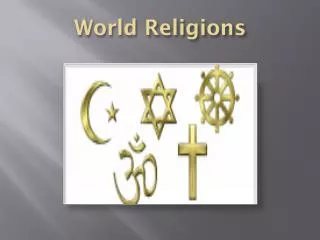
Judaism • Hebrews came to be called Jews, religion Judaism • Monotheistic- Yahweh (God) • Founder: Abraham • Promised to obey Yahweh • Covenant: mutual promise between God and Abraham • Holy Book: Torah (First five books of the old testament) • Sacred Writings: Talmud (written versions of Jewish law and interpretations) • Symbols: Star of David, Menorah (7 branch candlestick) • Exodus: • Jews migrate out of slavery in Egypt • Moses led the out of slavery • Received the 10 Commandments from God on Mt. Sinai • Beliefs: • One God • God created world and created Man in his image • The Jews are God’s chosen people • Promised Land: Cannan (God promised this land to the Jews through a covenant with Abraham) • All people are equal and should be treated with respect and love. • Laws: • All meat must be Kosher (prepared in a certain way and drained of blood) • Some foods prohibited • Meat and milk should not be used together • No work on the Sabbath (Friday evening – Saturday evening) • Religious Leader: Rabbi • Place of Worship: Synagogue
Christianity • Monotheistic • Share some beliefs, teachings, texts of Judaism • Founder: Jesus Christ • Holy Trinity: Father (God), Son (Jesus), Holy Ghost (God’s presence in the world) • Teachings/Beliefs: • Jesus is the son of God, born of the Virgin Mary • Apostles/Disciples: Followers of Christ, help spread the teachings • Parables: Stories used by Jesus to teach • Important Teachings: Compassion, Mercy, Forgiveness • Love God and love your neighbor • Humans are born into sin, saved from sin through Jesus • The crucifixion of Jesus was meant as a sacrifice to atone for human sins • Resurrection: Jesus rose from he dead three days after crucifixion, showing he was divine, symbolizing new life, the dead will rise again (eternal life). • Ordinary people were just as important and worthy as the rich and powerful • Holy Book: Bible • New Testament: The life and teachings of Jesus • Divisions of Christianity: • Roman Catholic • Eastern Orthodox • Protestant • Symbols: Cross, Fish • Religious Leaders: Priests, Ministers, Monks, Nuns
Islam • Monotheistic: Allah (God) • Founder: Muhammad • Islam = Religion, Muslim = follower of Islam • Holy Book: Qur’an (Koran) • Beliefs: • Muhammad was the last of the prophets (Abraham, Moses, Noah, Jesus Christ, Muhammad) • Life after death, this life prepares one for the next • Following the Five Pillars of Islam leads to salvation • Affirmation of Faith in Allah • Prayer five times a day • Gifts to the poor • Fasting during Ramadan (Holy Month) • Pilgrimage to Mecca (Holy City) • Religious Leaders: Imams • Temple: Mosque • Prayers are said facing Mecca • Symbols: Crescent and Star • Divisions of Islam: • Sunnis • Shi’ites