
Understanding Simple and Compound Interest: Key Concepts and Calculations
This guide explains the fundamentals of simple and compound interest. Simple interest is calculated by multiplying the principal amount by the interest rate and the time period. In contrast, compound interest involves calculating interest on both the initial principal and the accumulated interest over time, which can occur at various intervals (daily, monthly, etc.). The Rule of 72 is also introduced, allowing you to estimate how long it will take for an investment to double based on its annual return rate.

Understanding Simple and Compound Interest: Key Concepts and Calculations
E N D
Presentation Transcript
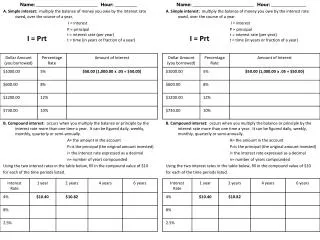
Name: ______________________________ Hour: _________________ A. Simple interest: multiply the balance of money you owe by the interest rate owed, over the course of a year. I = interest P = principal r = interest rate (per year) t = time (in years or fraction of a year) B. Compound interest: occurs when you multiply the balance or principle by the interest rate more than one time a year. It can be figured daily, weekly, monthly, quarterly or semi-annually. A= the amount in the account P=is the principal (the original amount invested) i= the interest rate expressed as a decimal n= number of years compounded Using the two interest rates in the table below, fill in the compound value of $10 for each of the time periods listed. I = Prt I = Prt Name: ______________________________ Hour: ___________ A. Simple interest: multiply the balance of money you owe by the interest rate owed, over the course of a year. I = interest P = principal r = interest rate (per year) t = time (in years or fraction of a year) B. Compound interest: occurs when you multiply the balance or principle by the interest rate more than one time a year. It can be figured daily, weekly, monthly, quarterly or semi-annually. A= the amount in the account P=is the principal (the original amount invested) i= the interest rate expressed as a decimal n= number of years compounded Using the two interest rates in the table below, fill in the compound value of $10 for each of the time periods listed.
72/i=Y 72/i=Y Rule of 72: the rule of 72 states that if you divide the number 72 by an investment’s annual return, you will determine the number of Rule of 72: the rule of 72 states that if you divide the number 72 by an investment’s annual i= interest Y=years