Download
1 / 9
90 likes | 219 Views
This lesson explores the transformative developments in medicine during the Renaissance, focusing on Andreas Vesalius and his groundbreaking approach to human anatomy. Students will learn the definition of 'Renaissance' and identify the elements that were reborn during this period. They will examine Vesalius's methods, including dissection of human bodies and challenging Galenic ideas. Through discussions, interviews, and a BBC documentary clip, students will assess Vesalius's contributions and the resistance he faced, enriching their understanding of medical history.

E N D
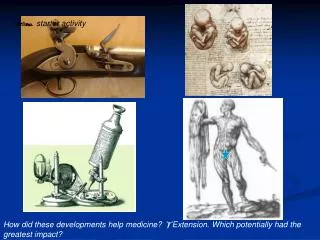
starter activity How did these developments help medicine? Extension. Which potentially had the greatest impact?
How did Vesalius change the way the human body was studied? LOs To define & explain the term ‘Renaissance’ To assess what was so revolutionary about Vesalius’ work
Your task • Read p.80-1. Add the word ‘Renaissance’ to your glossary. • List the things that were reborn in the Renaissance (c.1500-1700) • Extension. What factors caused the Renaissance? Who were reluctant to challenge old ideas and why?
Renaissance - rebirth • Interest in Greeks and Romans, especially ancient texts and culture • Value attached to education • New translations, e.g. Galen • New spirit of enquiry – people questioned established ideas much more, e.g. religion, Four Humours
Your task • Watch this clip from the BBC series on the history of surgery, ‘Blood & Guts’. Note down what was so revolutionary about Vesalius’ approach to medicine. • Who might resist his ideas?
Vesalius • Dissected human bodies – not animals like Galen • Challenged Galen’s ideas on human anatomy • Used new technology – printing press – to circulate his ideas (Da Vinci never published) • Prepared to break the law & challenge authorities to test out his ideas
Your task • Work in pairs. Use the information on p. 86-7 to write an interview with Vesalius. Ask him about the following things: • Early career • Fabric of the Human Body • Disagreements with Galen • Printing & artists • Challenges he faced Vesalius
Homework • Finish your interview. Make sure you both print out and keep a copy for your notes. • Extension. Why not try to get hold of a copy of ‘Blood & Guts and read about Vesalius. Produce a factoid on his life based on your reading
Plenary • Define ‘Renaissance’ • Define ‘medical renaissance’ • Vesalius – 3 contributions to medicine • Vesalius – challenges? • Extension. How much of a medical pioneer was Vesalius?