Understanding Actual vs Implied Lines in Visual Art: A Comprehensive Guide
This chapter from Sayre's 7th edition delves into the division of visual elements in art, specifically focusing on actual versus implied lines. It explores the characteristics of lines, including active, passive, aggressive, and sensual types. Through examples from 2D paintings to 3D sculptures, the chapter clarifies how these lines create visual connections and guide the viewer’s eye. By examining directional forces, including vertical, horizontal, and diagonal lines, it reveals how line orientation conveys stability, rest, and motion, thus enhancing the expressive quality of artworks.

Understanding Actual vs Implied Lines in Visual Art: A Comprehensive Guide
E N D
Presentation Transcript
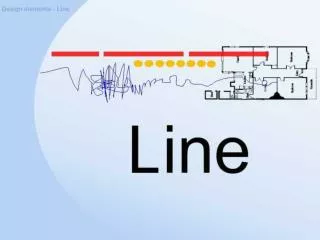
We begin the Visual Elements…Line Chapter 4 - Sayre 7th edition
LineActual vs. Implied • All the visual elements can be divided into actual vs. implied (i.e. actual mass vs. implied mass) • Usually the division is based on whether the work of art is 2D or 3D (i.e. sculpture has actual mass, painting has implied mass)
Implied lines • Suggested visual connections (i.e. sight lines) Fig 67/4-8
Fig 171/7-13 Does this exemplify actual or implied lines? HINT: It’s a trick!
Lines have a variety of characteristics… (four volunteers) • Active • Passive • Aggressive • Sensual
And anything around and between… Your book, for example, shows us two opposing types of line.
Part of the expressive quality of line has to do with Directional Force or Line Orientation
Line and Directional Force Directional forces – “paths” for the eye to follow, provided by actual or implied lines, in a work of art Directional forces - reveal a work of art’s underlying energy or basic visual structure
Vertical line - feeling of stability • Horizontal line – feeling of rest • Diagonal line – feeling of motion
Not so much (Fig 182/8-2) Frank Gehry