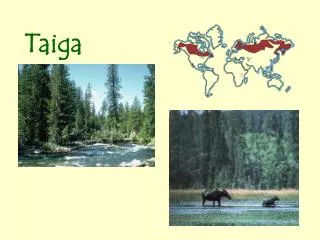
Understanding the Taiga Biome: Geography, Climate, and Biodiversity Insights
The Taiga biome, located in North America, Europe, and Asia, is characterized by its cool climate year-round and diverse plant life, including pines, spruces, and birches. The soil is thick, acidic, and often frozen, limiting growth. With annual precipitation of 10-30 inches and a temperature range featuring mild summers and harsh winters, the Taiga is home to unique adaptations among its organisms. Biodiversity in this ecosystem is crucial for sustainability, showcasing a variety of flora and fauna that interact with both biotic and abiotic factors.


Understanding the Taiga Biome: Geography, Climate, and Biodiversity Insights
E N D
Presentation Transcript
The Taiga Biome Research By Evan A. Carr
TaigaGeography and Climate • Location: North America, Europe, and Asia. • Description: Very cool all year long. Many types of trees. • Soil type: The soil is thick and acidic. The soil is also permanently frozen. Not good for growth. • Precipitation: 10 – 30 inches of rain per year. • Temperature range: Mild in the summer and cold in the winter. • Climate: Cool all year long with long summers and short winters.
TaigaBiodiversity Plants Animals pines squirrels alder elk spruces jays fins snow hare oak moles birch bears willow wolves conifers moose Overall, there are more than 16 species.
TaigaAdaptations of Organisms • Plants: Conifers do not drop leaves to conserve energy. Waxy needles help conserve precious water through transpiration • Animals: Think fur helps save warmth. Some animals migrate to a warmer area. Most organisms that survive here have camouflaged fur to blend in with the environment.
TaigaInteractions Between Abiotic and Biotic Factors • Biotic Help: Plant seeds provide food for small animals, such as squirrels. • Abiotic Help: The bogs and ponds in the Taiga provide a great summertime breeding place. Fires enrich the soil.
What is Biodiversity? • Biodiversity is the variety of living organisms in the environment. This includes all the abiotic and biotic counterparts in the habitat.
How does biodiversity contribute to the sustainability of an ecosystem? • If the ecosystem does not have a wide variety of life, it will not thrive as well as others that do. An example is a desert compared to a rainforest. The desert barely supports life because of the little amount of organisms. The rainforest however has many types of life.