Download
1 / 13
130 likes | 245 Views
This chapter outlines the fundamental components of the GSM switching system, focusing on key nodes and their functions. Participants will learn to identify three critical nodes within the switching system, recognize the two nodes involved in the security procedure, and understand the roles of authentication, ciphering, and equipment checking. Key concepts include the interaction between VLR and HLR, the process of subscriber authentication using triplets, and methods of accessing the Internet via GSM or PSTN.

E N D
Chapter 1 - Objectives After completing this chapter, participants will be able to: • Name 3 nodes in the Switching System • List which 2 nodes are contacted for the security procedure in the GSM system • Briefly explain the purpose of Authentication, Ciphering and Equipment Check
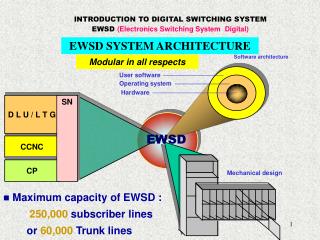
Switching System Min AUC SDP EIR SCF HLR ILR MSC/VLR MC GMSC SSF DTI Switching System
Request for triplets AUC from HLR (IMSI) RAND RAND generator Database A3 SRES Ki Authentication Algorithm IMSI Triplets Ki (or many per request) A8 Ciphering Kc Algorithm RAND Random number SRES Signed Response Kc Ciphering key Ki Subscriber authentication key IMSI International Mobile Subscriber Identity Provision of Triplets
1. RAND MSC/VLR 3. SRES MS 4. Compare SRES received from 2. MS calculates SRES using RAND + Ki(SIM-card) throug A3 and Kc using RAND+Ki through A8. MS with SRES in triplet. If they are equal access is granted. MSC/VLR Mobile service Switching Center MS Mobile Station RAND Random number SRES Signed Response Authentication Procedure