Download

1 / 30
300 likes | 441 Views
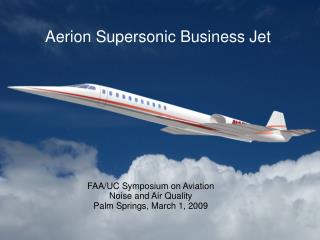
Discover the intriguing world of aviation language through the eyes of an experienced business jet pilot. In this examination, Ed Morrow explores the origins and relevance of pilot lingo, revealing how maritime terminology has shaped aviation phraseology. From the etymology of terms like "cockpit" to essential pilot/controller communications, gain insight into the technical vocabulary that pilots use daily. This exploration also addresses the culture of aviation and its historical context within the industry, offering a unique perspective on the intersection of language and aviation.

E N D
Business Jet Pilot Lingo By Ed Morrow
1. Why I’m doing this topic. • I work as a pilot and I’m lazy. • Because it is relevant to some of the general characteristics of American English. • To see how much pilots know about the background of aviation phraseology. • To see how it influences our linguistic behavior.
Cockpit comes from coxswain. • Etymology: • Early 14th century officer in charge of the boat and crew. • Cock > ship’s boat > Fr. Coque > canoe • Swain > “boy” > O.N. sveinn “boy, servant.” • It became the compartment where the ship’s pilot or helmsman steer the boat. • One pilot, who was familiar with the etymology mentioned that it was a pit so the pilot was protected from flying projectiles across the bow.
When you are too high, too fast, and really close to your airport in a mountain valley, you can expect a ________ approach. Slam dunk!
Pilot / Controller Glossary http://www.faa.gov/ • PILOT/CONTROLLER • GLOSSARY • PURPOSE • a. This Glossary was compiled to promote a common understanding of the terms used in the Air Traffic • Control system. It includes those terms which are intended for pilot/controller communications. Those terms • most frequently used in pilot/controller communications are printed in bold italics. The definitions are primarily • defined in an operational sense applicable to both users and operators of the National Airspace System. Use of • the Glossary will preclude any misunderstandings concerning the system’s design, function, and purpose. • b. Because of the international nature of flying, terms used in the Lexicon, published by the International • Civil Aviation Organization (ICAO), are included when they differ from FAA definitions. These terms are • followed by “[ICAO].” For the reader’s convenience, there are also cross references to related terms in other parts • of the Glossary and to other documents, such as the Code of Federal Regulations (CFR) and the Aeronautical • Information Manual (AIM). • c. This Glossary will be revised, as necessary, to maintain a common understanding of the system.
Examples of aviation lingo. • IMG_0873.MOV
ATIS (Automatic Terminal Information Service) • Boeing field information Tango 1953 Zulu, • Wind 220 at 7, wind variable between 150 and 240, • Visibility 10, sky’s clear • Temperature 13, dew point 6, altimeters 3018 • ILS 13 right approach in use, • Landing and departing runway 13 right and 13 left, • Aircraft landing 13 left are reminded to fly the PAPI, • Simultaneous approaches in use to SEATAC and Boeing airports, expect traffic above you on final…
Whenever some pilots hear a woman’s voice, they say: “There’s another empty kitchen” It is traditionally and historically a male dominated industry.
Example of aviation lingo. • IMG_0838.MOV
You see the rabbits? http://www.youtube.com/watch?v=GQxD-Qe11ow&feature=related http://www.youtube.com/watch?v=z_bO52VJHU8
What I learned: • Most pilots don’t know where their jargon came from. • Most jargon reflects general features of AE including some of the creative and productive processes. • Although it is important for some language to be clear and direct for efficiency, it is also important for some industry jargon to be creative and at times humorous.