Catholic Reformation: Council of Trent & New Orders
90 likes | 198 Views
Explore the Council of Trent, formation of new Catholic orders, and internal reforms during the Catholic Reformation era. Learn about key figures like Ignatius of Loyola and the Ursuline Order, as well as the reaffirmation of traditional beliefs and practices.


Catholic Reformation: Council of Trent & New Orders
E N D
Presentation Transcript
The Catholic Reformation The Formation of New Orders The Council of Trent Catholic Religious Reform
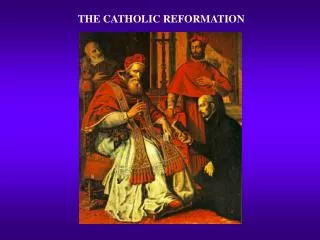
Formation of New Orders • Ignatius of Loyola • 1491 – 1556 • 1540 Jesuits approved • Pope Paul III • Spiritual Exercises published in 1548 • 4th Vow: obedience to the successor of Peter • Focus also on educational and missionary work (New World)
Ursuline Order • founded by Angela Merici (1474 – 1540) in 1535 • fight heresy through Christian teaching • teaching young girls • spread in France and the New World
Reform measures prior to Council of Trent • Index of Prohibited Books, 1542 • Roman Inquisition, 1542 Galileo before the Roman Inquisition , 1633
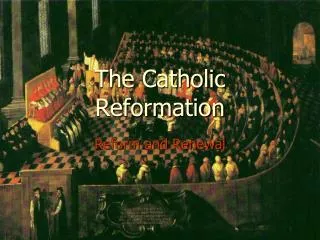
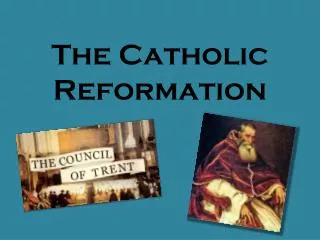
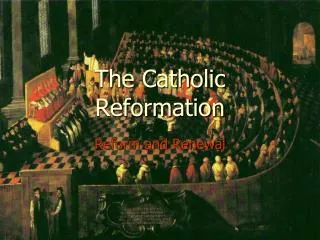
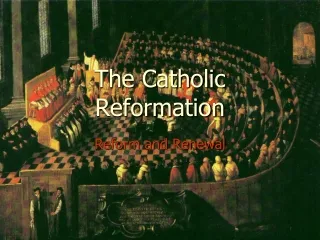
Council of Trent1545-1563 • Numerous attempts to call it but warfare – ecclesiastical turmoil • Finally called by Pope Paul III ---opened 1545, closed 1563 • Called not only to reform the church, but also for reconciliation • Lutherans and Calvinists invited to participate
Council of Trent, cont’d • International politics repeatedly played a role • Charles V fears Lutheran subjects rebelling against Holy Roman Empire • French rulers wanted no reconciliation – ultimately their problems lead to extensive religious warfare (civil war)
INTERNAL REFORMS: • Bishops – live in diocese • a. Strengthened the authority of local bishops • b. Bishops had to preach regularly and make annual visits to parishes • Priests educated • a. Priests needed to be presentable • b. Priests needed to be celibate • c. Priests needed to be active • Curtail the selling of church offices / religious goods • Canon of Scripture established
REAFFIRMATIONS • Traditional Scholastic education of clergy • Role of good works in salvation • Authority of tradition • Seven sacraments • Transubstantiation • Clerical celibacy • Purgatory • Veneration of Saints, relics, and sacred images • Indulgences