Download
1 / 2
20 likes | 147 Views
Risk and what to do about it is based on the deer tick life cycle. Mice are just as important as deer in generating ticks

E N D
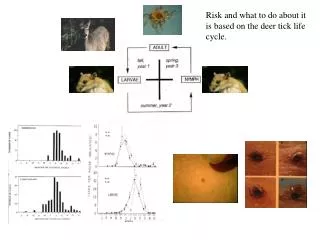
Risk and what to do about it is based on the deer tick life cycle.
Mice are just as important as deer in generating ticks Have to prevent 10 mice from feeding larvae during the summer to equal the effect of preventing one female tick from feeding (the successful reproduction of 1 female compensates for the killing of 2000 larvae or 200 nymphs) Acorns make mice which make more ticks Mouse density on Nantucket is not driven by scrub oak masting Coyotes and foxes are more important than deer for Lyme disease risk Even if we accept this speculation, these carnivores are not present on Nantucket Opossum and raccoons get rid of ticks These animals are not present on Nantucket Sites where they are present still have hyperendemic Lyme disease Biodiversity is the key to reducing Lyme disease We cannot expect to restore enough biodiversity to make an impact on public health within the next few generations Rabbits feed millions of ticks Yes. They have their own species of ticks (Ixodes dentatus and Haemaphysalis leporispalustris) which do not feed on people. Very few deer ticks feed on rabbits. Reducing deer does not reduce Lyme disease The majority of the experimental evidence demonstrates that reducing deer reduces deer tick density Deer tick density is reduced around 4 poster feeding stations, which target deer Distractions and fallacies about the deer tick life cycle on Nantucket