
Exploring Adaptive Immunity: Key Mechanisms and Insights
This comprehensive overview delves into the adaptive immune system, highlighting its two branches: humoral and cell-mediated immunity. It discusses critical interactions, such as MHC interactions and antibody responses to antigens. The presentation includes the structure of antibodies, particularly monoclonal IgG, and emphasizes variability in antibody residues through complementarity-determining regions (CDRs). Key processes like B cell development, immunoglobulin gene organization, class switching, and TCR rearrangement are also examined to provide a well-rounded understanding of immune responses.

Exploring Adaptive Immunity: Key Mechanisms and Insights
E N D
Presentation Transcript
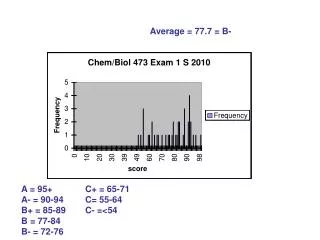
Average = 77.7 = B- A = 95+ C+ = 65-71 A- = 90-94 C= 55-64 B+ = 85-89 C- =<54 B = 77-84 B- = 72-76
Adaptive Immunity: 2 Branches Humoral Cell-mediated
Overview of Immune System
Variability of residues in different abs. The 3 hypervariable regions are termed complementarity- determining regions (CDR)
Side-view of Angiotensin II bound to Fab. Van der Waals surface contacts
A peptide fomr the HIV protease with an anti-protease Fab
Antigenic determinants of Abs
(human chromosome 22) (human chromosome 2) (human chromosome 14) Gene arrangements
Circular DNA isolated from thymocytes undergoing TCR rearrangement (these rearrange just like Ab genes)
H-gene expression
Class switching by alternative processing
When ss DNA is generated: Extra nucleotides can also be added: Nucleotide addition during joining