Download
1 / 26
260 likes | 384 Views
Digital Earth for Ecological and Resilience Education. www.worldviews.net. Ka Chun Yu, Rachel Connolly, Ned Gardiner, Healy Hamilton, Kathi Koontz, David McConville, Jessica Sickler, Ryan Wyatt. kcyu@dmns.org. Who is the Worldviews Network?.

E N D
Digital Earth for Ecological and Resilience Education www.worldviews.net Ka Chun Yu, Rachel Connolly, Ned Gardiner, Healy Hamilton, Kathi Koontz, David McConville, Jessica Sickler, Ryan Wyatt kcyu@dmns.org
Who is the Worldviews Network? Funded by NOAA Environmental Literacy Grants NA10SEC0080011 & NA10SEC0080017
Hayden Planetarium American Museum of Natural History Credit: Alfred Gracombe
Morrison Planetarium California Academy of Sciences Credit:Paul Grimmer
Gates Planetarium Denver Museum of Nature & Science
Gates Planetarium Denver Museum of Nature & Science 16.9 m dome diameter25° tilt, 6 projectors; 120 seats
Bioregional Community Dialogues Seeing Knowing Doing Dome presentation NGOs, design the future Systems perspective
Seeing: Visual ThinkingStorytelling at multiple scales Cosmic Global Bioregional
Seeing: Visual ThinkingScientific visualization of ecosystems at multiple scales Global Fresh Water All Water Ice
Seeing: Visual ThinkingScientific visualization of ecosystems at multiple scales Regional
Seeing: Visual ThinkingScientific visualization of ecosystems at multiple scales Local
Knowing: Systems ThinkingPlanetary Boundaries “A Safe Operating Space for Humanity” Rockstrom et al., Sept 2009, Nature, v461, p. 472
Design Thinking: Resilience of coupled human-natural systems Focus on synergetic solutions
Preliminary Evaluation Currently questionnaire data from N=391 audience members (5 events) Evaluation Goals • Increase environmental literacy • Understand social-ecological problems within context of Earth systems • Positive affective (emotional) response—awe, inspiration, amazement • Identify opportunities for further engagement • Awareness of community resources working to address problem
Knowledge Outcomes • 51%: Learned something new about ecological concepts Human-natural systems: • 26%: Recognized ecological changes caused by humans over time • 23%: Recognized human use of natural resources • 13%: Learning about what can be done to protect/restore environment in their regions
Immersive Experience 81%: Dome presentation enhanced understanding, e.g., • 39%: “It gave me perspective …” • 32%: “It allows me to see …” • 22%: “It made me understand …” • 10%: “It makes me feel …” (affective response)
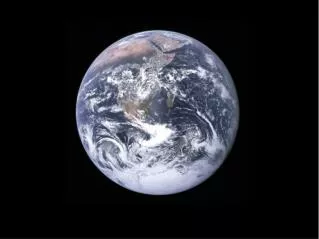
Reaction to Dome Presentation “Rank statements reflecting reaction to dome experience” • Thinking about complex Earth systems interrelationships • Visualizing concepts of time and space • Sense of how small Earth is
Affective Outcomes • 10% of respondents: dome presentation promoted an affective response • Inspiration, caring, personal relationship • These audience members ranked statements most frequently: • Feeling the need to take care of Earth • Feeling a sense of the sacred in regards to Earth • Amazement at the beauty of what was shown
https://partners.worldviews.net/ • Resources for the Uniview planetarium community • Professional development • Scripts, storyboards, links, background info • Visualization modules • KML / KMZ files
www.worldviews.net partners.worldviews.net Dr. Ka Chun Yu DMNS kcyu@dmns.org