Download
1 / 79
820 likes | 993 Views
This review explores fundamental concepts of energy, including thermal energy, kinetic energy, and electromagnetic energy. It covers key definitions such as insulators, the principles of energy transformation, and the law of conservation of energy. Readers will learn how energy is measured in joules, the process of heat transfer through conduction, and the processes that involve changes in energy forms. Practical examples demonstrate the applications of kinetic and potential energy in everyday scenarios. The review serves as an essential guide for understanding the dynamics of energy in physical science.

E N D
1. A material that does not conduct heat well is called a(n)
2. The total potential and kinetic energy of the particles in an object is called
5. Heat is transferred from one particle of matter to another without the movement of matter itself in a process called
The total energy of all the particles in a substance is called
Something that moves A ball rolling down the street
11. The movement of thermal energy from a warmer object to a cooler object is called
13. When you rub your hands together on a cold day, you use friction to convert
14. The transfer of energy by electromagnetic waves is called
18. Any temperature on the Kelvin scale can be changed to Celsius by
19. A measure of the average kinetic energy of the individual particles in an object is called
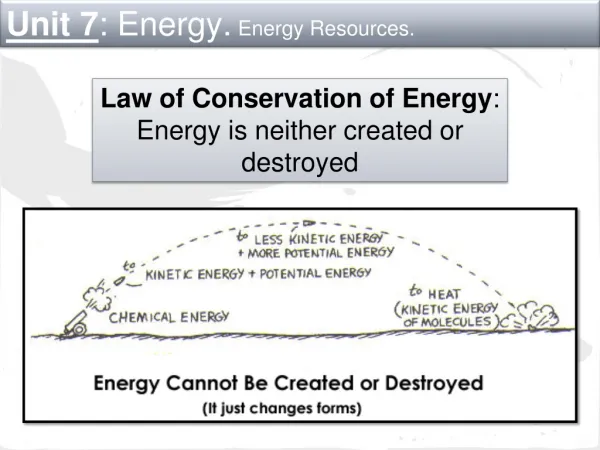
20. The law of conservation of energy states that when one form of energy is converted into another