Conceptual Control Framework
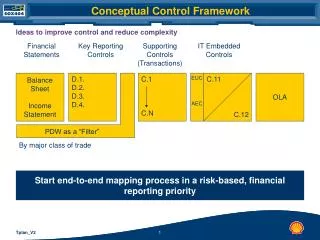
This framework presents innovative ideas to improve financial controls and reduce complexity in financial statements. By emphasizing key reporting and supporting controls, including transaction-level IT embedded controls, it offers a comprehensive risk-based mapping process. The conceptual hierarchy sets priorities for attention, streamlining financial reporting for the balance sheet and income statement. This approach enhances the closing of complex transactions while ensuring high business principles through robust assurance and audit practices, prioritizing quality personnel to support the critical financial processes.

Conceptual Control Framework
E N D
Presentation Transcript
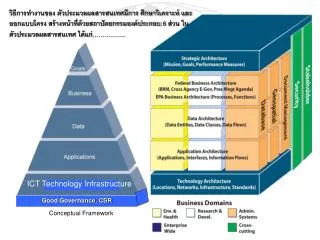
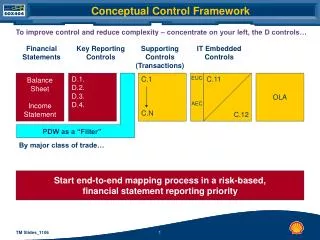
Conceptual Control Framework Ideas to improve control and reduce complexity Financial Statements Key Reporting Controls Supporting Controls (Transactions) IT Embedded Controls Balance Sheet Income Statement D.1. D.2. D.3. D.4. C.1 C.N EUC AEC C.11 OLA C.12 PDW as a “Filter” By major class of trade Start end-to-end mapping process in a risk-based, financial reporting priority
Conceptual Control Hierarchy Set “attention” priority to improve control & reduce complexity Financial Statements IS BS CLC Direct Analysis Closing Complex Transactions Transactions C-Transactions AEC – EUC IT Embedded Controls ITCC Applications ITGC – Infrastructure OLA – True High Business Principles, BCI, Assurance, Audit H/R – Quality People