Understanding Heat Transfer: Conduction, Convection, and Radiation Explained
70 likes | 197 Views
Heat transfer occurs in three main ways: conduction, convection, and radiation. Conduction involves direct contact, such as a metal spoon heating up on a stove. Convection refers to the movement of fluids, exemplified by hot water rising in a pot. Radiation is the transfer of energy through electromagnetic waves, like feeling the warmth of a fire across the room. Heat naturally moves from warmer objects to cooler ones, with conductors (like metals) efficiently transferring thermal energy, while insulators (like wood and wool) do not.


Understanding Heat Transfer: Conduction, Convection, and Radiation Explained
E N D
Presentation Transcript
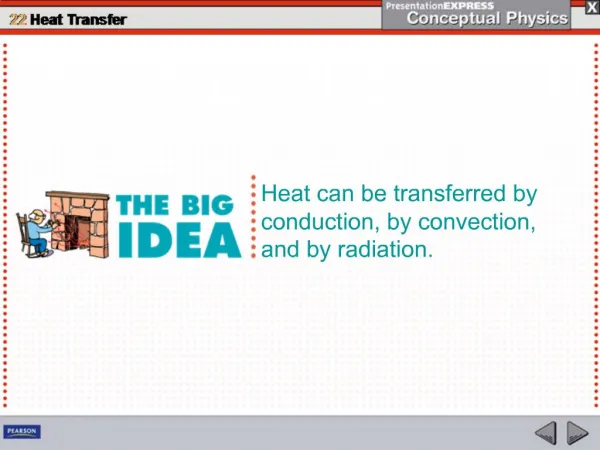
Heat is transferred by conduction, convection, and radiation
Conduction • Heat is transferred from 1 particle of matter to another through touch • Example: metal spoon on stove burner, spoon gets hot
Convection • Heat is transferred by movement of currents through fluids. • Example: water heating on a stove, hot water moves faster and goes to the top of the pot
Radiation • Transfer of energy by electromagnetic waves • Example: feel heat of a fire across the room
Heat Movement • Heat flows from the warmer object to the colder one
Conductors and Insulators • Conductors transfer thermal energy well • Example: metals • Insulators do not transfer thermal energy well • Example: wood, wool