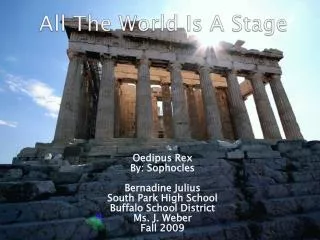
THE WORLD IS A STAGE
70 likes | 214 Views
Shakespeare’s metaphor of life as a stage reveals the intricate blend of appearance and reality. The sophisticated language he employs highlights the artifice inherent in human existence. In his time, female roles were played by men, creating a confusion that underscores the separation between true self and public persona. The characters often engage in soliloquies heard by the audience, illustrating the artificial dynamics of performance. This exploration ties back to Renaissance skepticism, questioning knowledge and truth, while art aims to shape the chaos of life into understanding.


THE WORLD IS A STAGE
E N D
Presentation Transcript
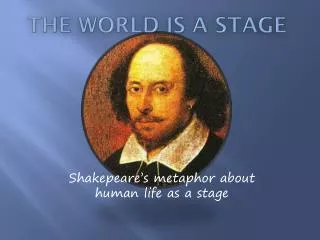
THE WORLD IS A STAGE Shakepeare’s metaphorabouthuman life as a stage
LANGUAGE The languageis sophisticated and itisn’t realistic Itconfirms the idea ofappearance and artificiality
ACTORS Girlsroleswereactedbymen so there’s a CONFUSION betweenappearance and reality
TECHNIQUES Artificial game betweenappearance and reality Apparently the charactersseemtospeaktothemeselvesbutactuallythey are heardby public
PLAY WITHIN THE PLAY Fakeness and artificiality A lieseemstrue – falsityisacceptedastruth
RENAISSANCE Philosophical and cultural rootsof Renaissance Scepticism: doubtsabout the knowledge (Montaigne)
The objectof art istogive life a shape. William Shakespeare THE END