Download
1 / 8
0 likes | 4 Views
Childhood allergies are common but manageable with the right strategies in place. By identifying triggers, creating an allergy-friendly home, using medications when needed, and maintaining a proactive approach, parents can help reduce the impact of allergies on their childu2019s life. Get more details at: https://cradlehospital.com/childhood-allergies/.

E N D
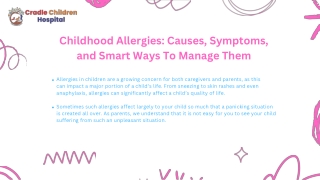
Childhood Allergies: Causes, Symptoms, and Smart Ways To Manage Them Allergies in children are a growing concern for both caregivers and parents, as this can impact a major portion of a child’s life. From sneezing to skin rashes and even anaphylaxis, allergies can significantly affect a child’s quality of life. Sometimes such allergies affect largely to your child so much that a panicking situation is created all over. As parents, we understand that it is not easy for you to see your child suffering from such an unpleasant situation.
What Are Childhood Allergies? Generally, the reason for allergies in children is due to a poor immune system or reaction of the immune system to a substance called an allergen, which is usually harmless. Some of the common allergens include pollen, dust mites, pet dander, certain foods, and insect stings. As we know, the immune system of children is still developing, which makes them more and easily prone to allergies compared to adults. The body’s immune system mistakenly identifies an allergen as harmful and releases chemicals like histamine to fight it, leading to allergic reactions.
Common Causes of Childhood Allergies • Genetics: If either of the child’s parent is allergic, the child is more likely to get it from their parents. The hereditary connection often captured from conduction lils food allergies, hay fever, and asthma. • Environmental Factors: One of the most common causes of childhood allergies is exposure to allergens like pollen, mold, or pet dander. The prevalence of allergies is increasing in urban areas due to an increase in pollution, poor air quality, and less exposure to the outdoor environment during childhood. • Food Allergies: Another allergen which are quite common in children is foods such as soy, wheat, shellfish, eggs, peanuts, and milk.
Common Causes of Childhood Allergies 4. Airborne Allergens: Pollen, dust mites, mold, and pet dander can cause allergic reactions in children. These allergens are present year-round but may be more problematic during certain seasons. 5.Infections: If your child is prone to some sort of viruses or infections in their childhood, they can worsen or trigger allergies, especially causing asthma or respiratory allergies.
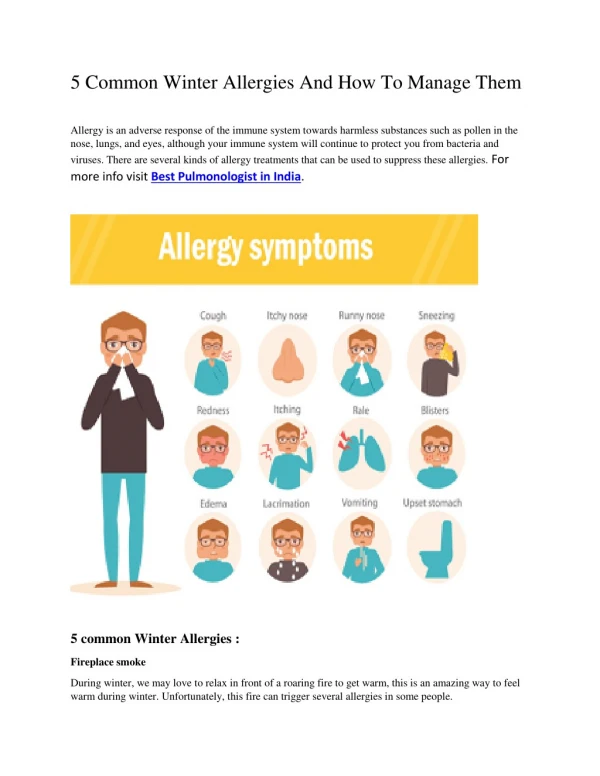
Symptoms of Childhood Allergies • Respiratory Symptoms: • Sneezing • Runny or stuffy nose • Coughing • Wheezing • Shortness of breath • 2. Skin Reactions: • Hives (raised, red welts on the skin) • Eczema (itchy, dry, red skin) • Swelling, especially around the eyes, lips, or face
Symptoms of Childhood Allergies • 3. Food Allergy Symptoms: • Nausea, vomiting, or diarrhoea • Swelling of the mouth or throat • Itchy skin or hives • Anaphylaxis (a severe, life-threatening allergic reaction requiring immediate medical attention) • 4. Eye Symptoms: • Itchy or watery eyes • Redness • Swelling
When to See a Doctor? • If you suspect your child has allergies or if they show signs of a severe allergic reaction (such as difficulty breathing or swelling), it’s important to see a healthcare professional. • A pediatric allergist can help diagnose the specific allergens triggering your child’s reactions and recommend appropriate treatments. Early intervention can significantly improve your child’s quality of life.
Conclusion Childhood allergies are common but manageable with the right strategies in place. By identifying triggers, creating an allergy-friendly home, using medications when needed, and maintaining a proactive approach, parents can help reduce the impact of allergies on their child’s life. Through education and awareness, children with allergies can live full, healthy lives and enjoy their childhood to the fullest. Contact Us Website - Cradle Children Hospital Phone +91 83770 10161