Download
1 / 8
0 likes | 0 Views
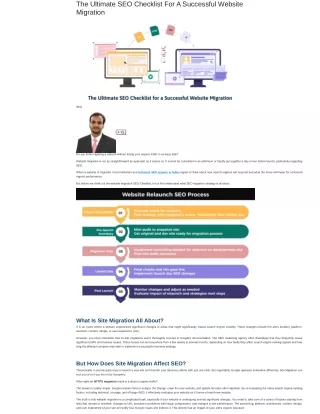
Is your website ready for the digital demands of 2026? This future-proof website development checklist covers essential strategies including AI-driven features, Core Web Vitals optimization, responsive design, and advanced security standards. Learn how to build faster, smarter, and safer websites that adapt to evolving user behavior and search algorithms while staying competitive in the next generation of web development.

E N D
Future-Proof Website Development Checklist for 2026 and Beyond Website development in the modern era focuses on building platforms that are stable, scalable, and discoverable. As search behaviour, device diversity, and performance expectations continue to increase, greater emphasis is placed on developing websites with technical precision, structured architecture, and long-term maintainability. Industry data indicates that global businesses increasingly rely on external development partners to build such platforms. So a big percentage of web projects are outsourced to specialised teams that handle performance optimisation, security implementation, and scalability requirements at scale. Performance continues to be a critical success factor, as even minor delays in page load times can directly affect user engagement and conversion outcomes. Web development practices are steadily integrating automation and AI-assisted workflows across coding, testing, and optimisation processes. During the development phase, technologies such as API first architectures, Progressive Web Applications, and accessibility focused design standards are implemented to deliver consistent user experiences across devices and platforms. By adopting these practices, websites are able to support voice interactions, visual discovery, and AI-driven search interpretation without the need for repeated structural rebuilds. When businesses plan for sustained digital growth, selecting the right development partner with proven technical depth becomes an essential consideration. Many global organisations choose to work with a website development company in India due to the availability of skilled engineering teams and experience in delivering complex digital solutions.
Through this checklist, you will learn how to evaluate website development requirements, identify future-ready technical foundations, and make informed decisions that support long-term performance, discoverability, and growth. Core Technical Foundations of a Future Ready Website A future-ready website is built on technical details that support performance, stability, and flexibility over time. These details help determine how effectively a website will deal with traffic growth, feature expansion, and changing user expectations. If a site’s base is weak, then it will face limitations, requiring regular repairs and rebuilds. H3 - Performance as a Key Factor One of the most important technical factors that decides a website’s value is performance. According to research, more than 50% of mobile users leave a website if it takes longer than 3 seconds to load. This directly affects user engagement and conversions. So, a website has to have its image optimised, script reduced, and code structure efficiently to maintain consistent performance across devices. A practical example in the case of speed is the working of an e-commerce website. If a website's load time was earlier four seconds and is now under two seconds, then it improves user mobile engagement and checkout rates. Such kind of improvements are achieved through managing better assets and having a cleaner frontend implementation instead of full redesigns.
H3 - Scalability Considerations Scalability is also an important consideration in the development of a future-ready website. So, it is necessary for a website to integrate services such as payment systems, analytics tools, or marketing platforms when the needs of a business grow. H3 - Security and Reliability Another technical aspect that plays a key role in the development of a future-focused website is its security and reliability. Industry reports from Akamai indicate that websites that experience frequent downtime or security issues will see long-term declines in terms of a user’s trust and search visibility. Therefore, it becomes necessary to address security updates, server stability, and data protection in a website to remain dependable as traffic and usage increase. AI Optimised Architecture and Search Readiness Once the core technical foundations, such as performance, scalability, and security,y are in place, the next focus naturally moves towards how a website is understood by search systems. A website may be fast and stable, but if search engines and AI systems cannot properly interpret its content and intent, then its visibility will remain limited. This is where AI-optimised architecture becomes important. H3 - Understanding AI-Driven Interpretation
An AI-optimised website architecture focuses on helping search systems understand content, intent, and structure clearly. In 2026, search engines will not onlyscang pages for keywords, but they will also evaluate how information is organised and how easily it can be interpreted by AI-driven systems. Because of this, website architecture plays an important role in long-term visibility. H3 - Structured Data for Search Readiness One of the main elements of AI search readiness is structured data. Structured data helps search engines understand what a page is about, whether it is a service, a product, a location, or a frequently asked question. If this data is missing or incomplete, then even good content may not appear correctly in search results. So, it becomes necessary to implement schema and semantic markup properly during development. H3 - Voice and Visual Search Compatibility Another important aspect is readiness for voice and visual search. Many users now search by speaking queries or by using images instead of typing text. If a website's content is written in a very rigid or keyword-focused way, then it may not match how people naturally ask questions. Similarly, images that are added without context or description do not help visual search systems understand what they represent. For example, a service website that includes clear headings, simple language answers, relevant images, and supporting metadata has better chances of appearing in voice-based or image-driven search results. These improvements usually do not require a redesign, but they do require planning at the architecture and content level. H3 - Maintaining Long-Term Search Visibility Overall, AI optimised architecture helps websites remain visible as search systems continue to change. By focusing on structured content, clear intent, and consistent signals across text and media, businesses can improve search readiness without constantly modifying their website structure. User Experience Consistency across Devices and Interfaces After a website is technically strong and search-ready, the next factor that shapes its effectiveness is how users actually experience it. Even if a website appears in search results, users will not engage with it if the experience feels confusing, slow, or inconsistent across different devices and interfaces.
H3 - Consistency across Devices Users access websites through smartphones, tablets, voice assistants, in-app browsers, and even embedded screens within other platforms. Because of this, a website has to maintain consistency in navigation, readability, and interaction flow regardless of how it is accessed. One important element of user experience is layout adaptability. H3 - Layout Adaptability One important element of user experience is layout adaptability. A website that works well only on large screens often causes frustration on smaller devices. According to Statista data, mobile devices account for more than 55% of global website traffic, which makes mobile-friendly layouts a basic requirement rather than an optional feature. If users struggle to scroll, tap, or read content properly, then they are more likely to exit without taking action. An example to make this thing clearer can be seen in lead generation websites. If a contact form is easy to fill out on a desktop but becomes difficult on mobile due to small input fields or unclear buttons, then conversion rates drop. By improving spacing, font size, and form flow, businesses are able to improve engagement without changing the core content.
H3 - Clarity and Navigation Another aspect of user experience is clarity. Websites that guide users clearly through services, pricing, or next steps tend to perform better competitively than others. Users feel confident while interacting with a website's simple menus, predictable navigation, and clear calls to action. H3 - Impact on Engagement and Long-Term Goals So, by focusing on a consistent user experience, it ensures that the technical and AI-optimised efforts made during a website's development will translate into engagement and results. When users are able to move from different devices and interfaces, a website becomes more effective in supporting long-term business goals. Choosing the Right Website Development Company Selecting the right development partner is one of the most important decisions for businesses planning long-term digital growth. Even the best technical foundations and UX improvements can fail to deliver results if the partner lacks experience, understanding, or a structured process. Working with the right company ensures projects are delivered on time, remain scalable, and are optimised for modern search and user expectations. H3 - Evaluating the Technical Ability of Developers
A competent website developer should have proven technical web development skills across multiple areas, such as performance optimisation, responsive design, API based integrations, and security best practices. This confirms that they can handle complex requirements. Further, they should review case studies or previous projects to learn how to maintain a website's quality. H3 - Platform Developed for AI and Search Readiness Websites must be prepared for AI-powered search, voice, and visual queries. So, ask the potential developers how they implement structured data, semantic markup, and content that aligns with emerging search systems. Companies that understand AI readiness will ensure that your website maintains visibility. H3 - Assess Process and Communication A reliable company will share timelines, development milestones, and testing procedures upfront. Such clear communication and a structured development process are essential to gain confidence and trust between the website owners and developers. The ability to collaborate closely with your team provides transparency at every stage of the project. H3 - Consider Cost, Value, and Long-Term Partnership While cost is always a factor in the web development process, choosing a development partner should focus on long-term value. Many global businesses work with a website development company because of the balance of talent and cost-effectiveness. Companies that offer ongoing support and maintenance help reduce technical debt and improve the longevity of your website. H3 - Red Flags to Watch Do not work with a company that overpromises or focuses only on website templates without offering any strategic planning. Many firms lack process clarity or have poor communiqué, which indicates that the partner may not deliver good results. Therefore, it becomes necessary to partner with the right company to ensure that your investment will generatea return on investment that performs, scales, and remains relevant as technology and user expectations evolve. Final Checklist for Websites Built to Last Beyond Building a website for the long term requires attention to technical nitty-gritties, AI readiness, user experience, and the right development partner. So, ensure that your website’s performance is optimised, content is structured for AI search, and interfaces are consistent across devices. By choosing a website development company, you will have a site that delivers results.
So, start your future-ready website journey today by auditing your current platform’s performance, scalability, and search readiness. Taking this step will help your digital presence stay competitive in changing times.