Cryptographic Key Search and Automated Discovery in Math
Explore the encoding of cryptographic key search as a SAT problem and automated concept formation in mathematics using AI techniques. Learn how to optimize SAT processes and discover novel mathematical concepts efficiently.

Cryptographic Key Search and Automated Discovery in Math
E N D
Presentation Transcript
Artificial Intelligence More IJCAI 99 Ian Gent ipg@cs.st-and.ac.uk
Artificial Intelligence Three more papers from IJCAI Part I : SAT for Data Encryption Part II: Automated Discovery in Maths Part III: Expert level Bridge player
SAT for data encryption • “Using Walk-SAT and Rel-SAT for cryptographic key search” • Fabio Massacci, Univ. di Roma I “La Sapienza” • Proceedings IJCAI 99, pages 290-295 • Challenge papers section • Rel-SAT? A variant of Davis-Putnam with added “CBJ” • Walk-SAT? A successful incomplete SAT algorithm
Cryptography background • Plaintext P, Cyphertext C, Key K • (can encode each as sequence of bits) • Cryptographic algorithm is function E • C = EK(P) • If you don’t know K, it is meant to be hard to calculate • P = EK-1(C)
Data Encryption Standard • Most widely used encryption standard by banks • Predates more famous “public key” cryptography • DES encodes blocks of 64 bits at a time • Key is length 56 bits • Loop 16 times • break the plaintext in 2 • combine one half with the key using “clever function” f • XOR combination with the other half • swap the two parts • Security depends on the 16 iterations and on f
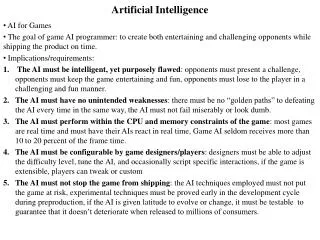
Aim of Paper • Answer question “Can we encode cryptographic key search as a SAT problem so that AI search techniques can solve it?” • Provide benchmarks for SAT research • help to find out which algorithms are best • failures and successes help to design new algorithms • Don’t expect to solve full DES • extensive research by special purpose methods • aim to study use of general purpose methods
DES as a SAT problem • Use encoding of DES into SAT • Each bit of C, P, K, is propositional variable • Operation of f is transformed into boolean form • CAD tools used separately to optimise this • Formulae corresponding to each step of DES • This would be huge and unwieldy, so • “clever optimisations” inc. some operations precomputed • Result is a SAT formula (P,K,C) • remember bits are variable, so this encodes the algorithm • not a specific plain text • set some bits (e.g. bits of C) for specific problem
Results • We can generate random keys, plaintext • unlimited supply of benchmark problems • problems should be hard, so good for testing algorithms • Results • Walk-SAT can solve 2 rounds of DES • Rel-SAT can solve 3 rounds of DES • compare specialist methods, solving up to 12 rounds • Have not shown SAT can effectively solve DES • Shown an application of SAT,and new challenges
Automated Discovery in Maths • “Automatic Concept Formation in Pure Mathematics” • Simon Colton, Alan Bundy • University of Edinburgh • Toby Walsh • University of Strathclyde (now York) • Proceedings of IJCAI-99, pages 786-791 • Machine Learning Section • Introduces the system HR • named for Hardy & Ramunajan, famous mathematicians • Discovered novel mathematical concepts
Concept Formation • HR uses a data table for concepts • A concept is a rule satisfied by all entries in the table • Start with some initial concepts • e.g. axioms of group theory • use logical representation of rules, I.e. “predicates” • Now we need to do two things • produce new concepts • identify some of the new ones as interesting • to avoid exponential explosion of dull concepts
Production rules • Use 8 production rules to generate new concepts • new table, and definition of new predicate • e.g. “match” production rule • finds rows where columns are equals • e.g. in group theory, general group A*B = C • match rule gives new concept “A*A = A” • Production rules can combine two old concepts • Claim that these 8 can produce interesting concepts • No claim that all interesting concepts covered
Heuristic Score of Concepts • Want to identify promising concepts • Parsimony • larger data tables are less parsimonious • Complexity • few production rules necessary means less complex • Novelty • novel concepts don’t already exist • Concepts and production rules can be scored • promising ones used
Results • Can use HR to build mathematical theories • This paper uses group theory • HR has introduced novel concepts into the handbook of integer sequences • e.g. Refactorable numbers • the number of factors of a number is itself a factor • e.g. 9 is refactorable • the 3 factors are 1, 3, 9. So 9 is refactorable
Expert level bridge play • “GIB: Steps towards an expert level bridge playing program” • Matthew Ginsberg, Oregon University • Proceedings IJCAI 99, pages 584-589 • Computer Game Playing section
Expert level bridge play • Aren’t games well attacked by AI? • Deep Blue, beat Kasparov • Chinook, World Man-Machine checkers champion • subject of a later lecture • Connect 4 solved by computer • Little progress on on 19x19 board • because of two types of game • Go, Oriental game huge branching rate • Card games like bridge • because of uncertain information, I.e. other players cards
What’s the problem? • If we knew location of all cards, no problem • << 52! Sequences of play, because of suit following • dramatically less than games like chess • one estimate is 10120 • We have imperfect information • estimates of quality of play have to be probabilistic • To date, computer bridge playing very weak • Slightly below average club player • “They would have to improve to be hopeless” • Bob Hamman, six time winner of Bermuda Bowl
What’s the solution? • Ginsberg implemented brilliantly simple idea • Pretend we do know the location of cards • by dealing them out at random • Find best play with this known position of cards • score initial move by expected score of hand • Repeat a number of times (e.g. 50, 100) • Pick out move which has best average score • This is called the “Monte Carlo” method • standard name in many areas where random data is generated to simulate real data
GIB • Ginsberg implemented (and sells) system called GIB • Best play in given deal found by standard methods • general methods subject of forthcoming lectures • Dealt at random consistent with existing knowledge • cards played to date, bidding history • Separate method for bidding (less successful) • GIB has some good results • won every match in 1998 World Computer Championship • lost to Zia Mahmoud & Michael Rosenberg by 6.4 IMPs • surprisingly close, though only over short match