Disparities in Contraceptive Use Among Married Women: Wealth-Based Inequalities
20 likes | 160 Views
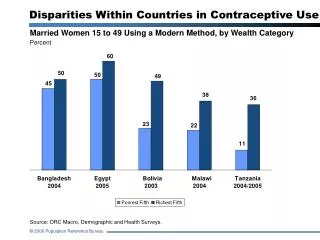
Recent research reveals significant disparities in contraceptive use among married women aged 15 to 49 in various countries, particularly when analyzed by wealth category. For instance, in Tanzania, only 11% of the poorest women use modern contraception, compared to 36% of the wealthiest. These stark differences underscore the challenges family planning programs face in addressing the needs of the poorest populations. Effective strategies are necessary to enhance access to contraceptive services for disadvantaged groups to promote equitable health outcomes.


Disparities in Contraceptive Use Among Married Women: Wealth-Based Inequalities
E N D
Presentation Transcript
Disparities Within Countries in Contraceptive Use Married Women 15 to 49 Using a Modern Method, by Wealth Category Percent Source: ORC Macro, Demographic and Health Surveys.
Notes on Disparities Within Countries in Contraceptive Use • Recent research highlights the enormous differences in range of demographic variables between the richest and poorest members of society. For example, among the poorest women in Tanzania, only 11 percent use contraception, while 36 percent of the wealthiest do. Family planning programs face ongoing challenges to meet the needs of countries’ poorest citizens.