CONFLICT
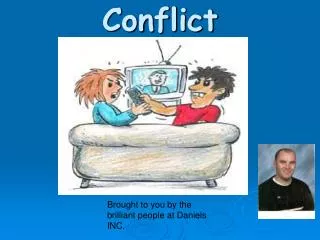
Conflict is a core element of storytelling that creates tension and drives narrative. It can be external, involving a character's struggle against outside forces like other characters, society, or nature. Alternatively, internal conflict occurs within a character, grappling with their own desires, emotions, or decisions. Each type of conflict propels the story forward and enhances reader engagement. Common examples include character vs. character battles, societal challenges, cultural clashes, and personal struggles. Understanding these dynamics enriches storytelling techniques.

CONFLICT
E N D
Presentation Transcript
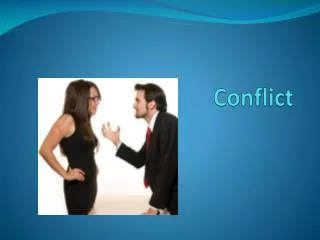
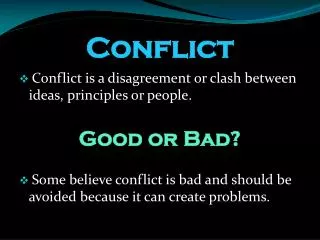
CONFLICT • Conflict– A struggle between opposing characters or opposing forces. • External Conflict – A struggle between a character with an outside force. Which may be another character, society, or a natural force. • Internal Conflict – A struggle takes place within a character’s own mind. Such as opposing needs, desires, or emotions.
It is conflict, or struggle, that gives any story its energy and makes it interesting. • Common conflict: • A conflict between two characters. • A conflict between a character and a group or a whole society. • A conflict between two groups or cultures. • A conflict between a character and a natural force or event, such as a flood or the law of gravity. • A conflict between a character and something in himself or herself: perhaps fear, shyness, homesickness, or an inability to make a decision.