Download
1 / 25
270 likes | 395 Views
Hinduism, with origins dating back to 2000-1500 BCE among the Arya peoples, evolved from the Vedic religion characterized by rituals and male deities associated with the heavens. The Brahmin priests played a crucial role in controlling rituals and prayers, primarily outlined in the Rig Veda and Brahmanas. As Hinduism developed, it became more polytheistic, embracing approximately 330 million deities, including notable gods like Vishnu, Shiva, and Brahma. Central teachings revolve around karma, dharma, samsara, and the pursuit of moksha, emphasizing spiritual liberation and the unity of existence.

E N D
Vedic Religion • Male deities associated with the heavens • Sacrifice-essential ritual • Brahmin priest controlled rituals and prayers • Rig Veda – thousands of poetic hymns • Brahmanas -descriptions of procedures
Hinduism Beginnings • Evolved from Vedic Religion • Dates: 2000-1500 BCE • Founders: Arya Peoples • No individual • Process=unknown • Brahmin priests still at top • Sacrifice less central • More opportunity for direct contact between gods and individual worshipers
Ganesh Hinduism • Where Practiced?: • India • Monotheistic?: • No => Polytheistic: • 330 Million
Religious Books: • Vedas: collection of psalms, prayers, chants • Upanishads: origin of the universe, Brahman • Epic Poems: • Ramayana: Life of Rama (Vishnu) • Mahabharata: longest poem in the world • Contains the Bhagavad Gita
Place of Worship Temples Home Shrines Rel. Leader: Brahmin No Rel. Sects
GODS Hinduism has thousands of gods. Families worship their own god.
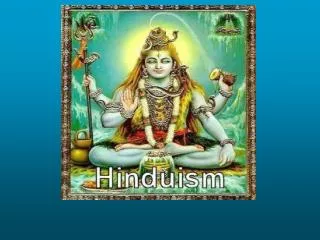
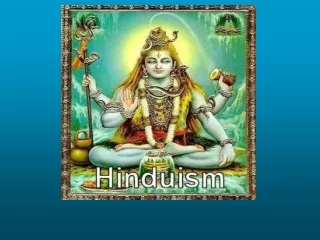
Vishnu Hindu Gods • Vishnu: preserver • Shiva: destroyer Brahma Shiva
BRAHMA • The Creator God • Four faces stand for the four corners of the universe • Many Hindus believe that all Gods originate from Brahma
Hinduism Gods • Brahma: Supreme force of universe • Salt and Water Analogy
VISHNU • “The Preserver God” • maintain balance of good and evil • returns to earth as different forms (avatars) to bring justice/balance • Human and animal
Shiva • The Destroyer God • “Cosmic Dance” • Dances in a halo of fire • Fire in left hand • He crushes the dwarf
Shiva • Left hand holds the flame of destruction, purification, and renewal • Snake symbolize his power over evil
Rules and Laws • Caste System: Social Classes • Karma: good and bad actions • Dharma: Duties • Samsara: cycle of life • (birth, life, death and rebirth)
Samsara • Samsara: People go through Cycle of birth, life, and death • Reincarnated (reborn) at either a higher or lower level depending on how well they fulfilled their dharma
Karma • Karma • Actions performed by each individual during a lifetime. • Good action = a step towards a better rebirth • Bad action = step towards a poorer rebirth • Can be reborn as an animal—it will be harder for them to gain the knowledge they need to escape from samsara
Dharma • Duties: set of rules to be followed • Obligations to family and society. • Determined by one’s position (caste) in society and by the stage of life that they have reached.
Moksha • Liberation from samsara (cycle of life) • Your soul (atman) becomes one with Brahman, the universal soul • This happens when one’s karma (actions) continually fulfills their dharma (duty). • Replace ignorance with wisdom.
OM or AUM • Main symbol of Hinduism • visual and verbal expression of god • “a” = beginning • “u” = progress • “m” = dissolution
Miscellaneous Hindu Practices • Cremated the same day you die • Suttee / Sati • “virtuous woman” • Ganges = Sacred • Cow = sacred
SRI YANTRA • focal point for meditation • 9 triangles intersect to form 43 triangles • 3 concentric circles • framed by a square
Hindu Meditation SRI YANTRA This form is the geometric expression of thedivine sound of creation... OM
Conclusion • Successful transformation based on Vedic Oral Tradition • Ultimate victory of Hinduism over Buddhism • Buddhism was driven from the land of its birth • Responded to needs of people for personal deities • Buddhism demanded too much of ordinary people • Absorbed Buddha as a God • Behind the diversity and multiplicity of Indian religion lies an ultimate unity.