Evaluating Subjective Well-Being as a Measure of Utility
This document examines the role of subjective well-being (SWB) in assessing utility, arguing that if utility can be measured, then SWB may serve as a valid content. It reviews methods for measuring SWB, including introspection, self-reports, behavior observation, and brain scans. While these methods provide insight into emotional states, they are affected by biases and limitations. The discussion also covers practical and philosophical considerations in adopting SWB as a utility measure. Ultimately, well-being can be measured, but careful considerations must guide its application in economics.

Evaluating Subjective Well-Being as a Measure of Utility
E N D
Presentation Transcript
Teaser • All things considered, how happy have you been these days out of 10?
Frey & Stutzer 2002 • If the content of utility can be measured, then economists should consider using that content instead of the current content-free method. • The content of utility, in the form of subjective well-being, can be measured. • Therefore, economists should consider using that content instead of the current content-free method.
Is subjective well-being (SWB) an appropriate content for utility? • Is SWB the right kind of thing to fill utility? • It’s a very good fit conceptually • But, it will only work if it can be objectively measured
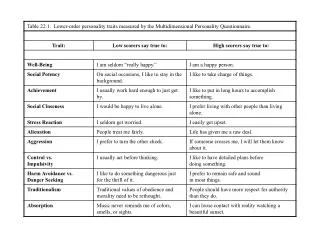
What is the evidence for subjective well-being being measurable? • Introspective • Self-reports • Observing behaviour • Brain scans
Introspection • Ask yourself how you feel about your life • We may be bad at predicting what will bring us happiness but we are quite good at assessing our current emotional state and our satisfaction with our life • But sometimes we are affected by biases
Self-Reports • Communicating your introspection • Usually by questionnaires • But biases can affect the results • Kahneman
Observing Behaviour • Smiling (real smiles) • Does away with many biases from self-reports buts adds other problems (similar to the ones with the current economic model
Brain Scans • Various methods including EEG • Left vs. right hemisphere brain activity • More left hemisphere brain activity at ‘rest’ = positive affect • More right hemisphere brain activity at ‘rest’ = negative affect • Correlated with behaviour and self-reports • But best fit still only about 0.2
What are the other considerations when deciding whether to use subjective well-being as the content for utility? • Practical considerations • Philosophical considerations
What is the future for subjective well-being as the content for utility? • Well-being can be measured but practical and philosophical considerations must be taken into account • Other measures need to be taken into account