Argon
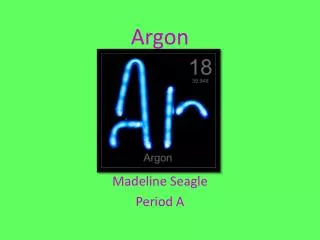
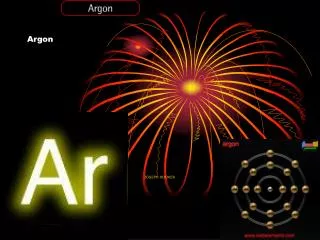
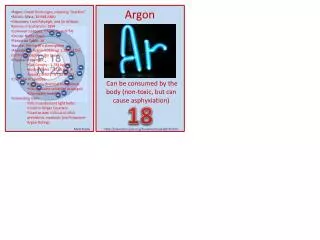
Argon. Argon: Greek from argos , meaning “inactive” Atomic Mass: 39.948 AMU Discovery: Lord Ralyeigh , and Sir William Ramsey in Scotland in 1894 Common Isotopes: 40 Ar, 36 Ar, and 38 Ar Group: Noble Gases Period on Table: 18 Source: The Earth’s atmosphere

Argon
E N D
Presentation Transcript
Argon • Argon: Greek from argos, meaning “inactive” • Atomic Mass: 39.948 AMU • Discovery: Lord Ralyeigh, and Sir William Ramsey in Scotland in 1894 • Common Isotopes:40Ar, 36Ar, and 38Ar • Group: Noble Gases • Period on Table: 18 • Source: The Earth’s atmosphere • Abundance: Argon makes up 1.29% of the Earth’s atmosphere (by mass) • Physical Properties: • Gas Density : 1.784 kg/m3 • Boiling Point : -302.6 deg. F • Liquid Density : 87.01 lb./ft3 • Chemical Properties: • Forms no chemical compounds • Has the same solubility as oxygen • Chemically inactive • Interesting Uses: • Fills incandescent light bulbs • Used in Geiger Counters • Used to date rocks and other prehistoric materials (via Potassium-Argon Dating) • Can be consumed by the body (non-toxic, but can cause asphyxiation) Matt Brady http://education.jlab.org/itselemental/ele018.html 18