International Trends in Joint Replacement Data: Insights and Initiatives
90 likes | 195 Views
Explore comprehensive data on joint replacements worldwide, highlighting transparency, quality measures, and evolving healthcare initiatives. Understand the landscape in different countries and the impact on patients and employers.


International Trends in Joint Replacement Data: Insights and Initiatives
E N D
Presentation Transcript
Community Dialogue March 28th, 2014Total Joint Replacements
2011 1997 Minnesota Health Action Group; confidential - do not copy or distribute without permission
International Landscape • 26 countries, European countries plus Australia, New Zealand and Canada, collect joint replacement data in national registries; some since 1975 to support quality improvement, track devices • Transparency - web based information in some countries for consumer decision support • NHS includes • Hospital reviews (similar to Yelp) • Hospital quality by type of surgery • Physician quality • Mortality • Volume by type of surgery; hip, knee, primary, revisions • Reasons physicians don’t report • Patient education – materials and videos on surgical procedure, patient experience, recovery Minnesota Health Action Group; confidential - do not copy or distribute without permission
International Landscape – U.S. Compared to OECD Knee replacements Hip replacements U.S. Frequency Per 100,000 Minnesota Health Action Group; confidential - do not copy or distribute without permission
Trend in Selected OECD Countries 2000-2009 Total Knee Replacements Total Hip Replacements Minnesota Health Action Group; confidential - do not copy or distribute without permission
US Landscape • Quality measures and registries evolving • Provider initiatives • Research on improvement • Function and Outcomes Research for Comparative Effectiveness in TJR (FORCE TJR) • High Value Healthcare Collaborative • Employer initiatives besides MN Health Action Group • CalPERS reference pricing • PBGH/ECEN – Walmart & Lowes COEs • BridgeHealth surgery networks • Alliance, Madison – QualityPath • Payer initiatives • Numerous CMS bundled payment initiatives • Numerous private payer bundled payment initiatives • Consumer Reports Safe Patient Project calling for device warranties Minnesota Health Action Group; confidential - do not copy or distribute without permission
Minnesota Landscape • High relative cost • High relative volume – both hips & knees • Little transparency in cost – CMS website shows MN hospital allowed amounts range ~$23k to ~$55k (2.5 fold) • Little information about quality • CMS website for DRG 470 • MN complications mirrors US • Better than average patient experience but high variation - 69% to 88% • MNCM pilot for TKR delayed • No local CMS bundled payment initiatives • Private payer bundled payment emerging recently Minnesota Health Action Group; confidential - do not copy or distribute without permission
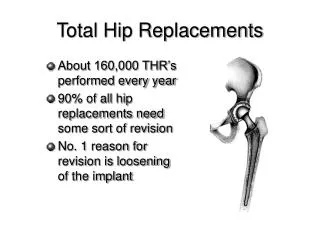
Why Do Employers Care about TJRs? • High and variable cost; primarily in hospitals and devices • High and increasing frequency • Complications - resulting in recalls • Highlight device failures and uncertain longevity • Much more expensive than original surgery • Impact on productivity, functionality, increased costs • Baby boomer generation + obesity = even higher use • TJR volume has doubled since 2003, TKR tripled for <65 • Obesity a bigger driver for younger patients; 65% <65 • Known effectiveness in short term; longer term outcomes unknown Minnesota Health Action Group; confidential - do not copy or distribute without permission
AHIP (American Health Insurance Plans) Data Total Joint Replacements DRG 470 Minnesota Health Action Group; confidential - do not copy or distribute without permission