Download
1 / 12
120 likes | 248 Views
This overview explores the primary groups of organic compounds composed of carbon and their vital functions in biological systems. Carbohydrates serve as major energy sources, while lipids are crucial for energy storage and cellular structures. Nucleic acids, including DNA and RNA, are key in genetic information storage and transmission. Proteins, made of amino acids, play diverse roles such as catalyzing reactions and supporting cellular functions. Each group illustrates carbon’s unique ability to form various molecular structures, demonstrating its importance in organic chemistry.

E N D
Carbon Compounds Describe the functions of each group of organic compounds.
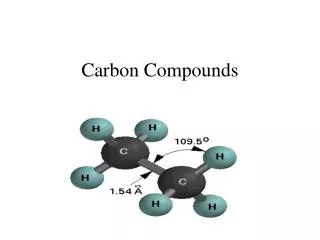
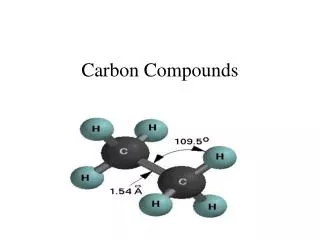
The Chemistry of Carbon • organic chemistry - study of all compounds that contain bonds between carbon atoms • Carbon can form 4 covalent bonds • four valence electrons • with itself or with other atoms including hydrogen, oxygen, phosphorus, sulfur and nitrogen
Carbon’s Versatility • Carbon can form different types of bonds: • single • double • triple • Chains • Rings • Highly branched
Macromolecules • Formed by a process known as polymerization • Monomer – subunits or building blocks • Polymer - large compound formed from monomers • Four groups of organic compounds: carbohydrates, lipids, nucleic acids, and proteins.
Carbohydrates • carbon, hydrogen, and oxygen • 1 : 2 : 1 • C6H12O6 • main source of energy • structural purposes
Carbohydrates • Monosaccharide - single sugar molecule [monomer] • Glucose, galactose – milk, fructose - fruit • Polysaccharide - large macromolecule formed from monosaccharides [polymer] • Glycogen [animal starch] - animals store excess sugar • Starch - plants store excess sugar • Cellulose - Tough, flexible fibers give plants strength and rigidity
Lipids • mostly carbon and hydrogen • not soluble in water • used to store energy • important parts of biological membranes and waterproof coverings • Steroids are lipids as well; serve as chemical messengers.
Many formed when a glycerol moleculecombines with fatty acids Fatty Acids • saturated – all carbon atoms joined by a single bond • solid at room temperature • butter & lard • unsaturated – at least one carbon-carbon double bond in a fatty acid • liquid at room temperature • polyunsaturated - contains more than one double bond • corn oil, sesame oil, and peanut oil
Nucleic Acids • hydrogen, oxygen, nitrogen, carbon, and phosphorus • store and transmit genetic information • composed of monomers called nucleotides • two kinds of nucleic acids: • ribonucleic acid (RNA) • deoxyribonucleic acid (DNA)
Nucleic Acids • Nucleotide • 5-carbon sugar • phosphate group • nitrogenous base
Proteins • nitrogen, carbon, hydrogen, and oxygen • composed of monomers called amino acids • amino group (–NH2) • carboxyl group (–COOH) • more than 20 different amino acids All parts of amino acid are identical except R-group
Functions of Protein • control rate of reactions and regulate cell processes • used to form bones and muscles • transport substances into or out of cells • help to fight diseases