Download

1 / 7
70 likes | 184 Views
Franklin D. Roosevelt's New Deal was a series of programs and reforms aimed at combating the Great Depression from 1933 to 1935. His empathetic leadership included "Fireside Chats" to communicate directly with the public. Key initiatives included the Glass-Steagall Act, which established bank deposit insurance, and the Agricultural Adjustment Act, which aimed to stabilize crop prices. The New Deal also faced criticism from figures like Father Coughlin and Huey Long, who proposed more radical solutions. Overall, it intended to provide relief, recovery, and reform to America's economy and society.

E N D
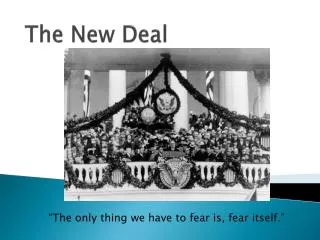
I. Franklin Roosevelt • Greatest strength was his warm and understanding of people. • Fireside chats – radio talks explaining how he planned to fight the depression • Developed a brain trust to help develop a plan to address the Great Depression
II. The First New Deal • Suspended banking activities; only healthy banks were allowed open. • “First Hundred Days” – recovery and reform proposals sent to Congress. These proposals became known as the New Deal • Three purpose of New Deal • Recovery from depression • Relief for its victims • Reform the economic system • 1933-1935 known as “First New Deal” period
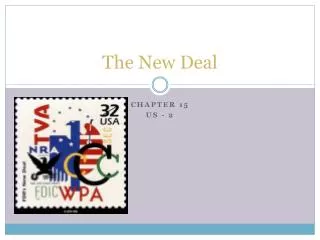
Financial Reform: Help for the jobless • 1933, Glass-Steagall Act – created federally insured bank deposits to prevent bank failures (FDIC) • Securities Exchange Commission – regulated stock market and margin buying • 1933, Federal Emergency relief Administration – gave money to states to direct aid to the homeless and unemployed • 1933, Public Works Administration and Civil Works Administration – construction jobs • 1933, Tennessee Valley Authority – government built dams to prevent flooding and sold electricity. • Critics argued takeover unfair and communisitic • Competed with private energy companies • 1933, Civilian Conservation Corps – offered outdoor work to men; helped conserve natural resources
Relief for Agriculture • Placed a moratorium on mortgage foreclosures • Problem was low prices due to overproduction • Agricultural Adjustment Act – government paid farmers who cut production of crops • 1934-135 Dust Bowl – destroyed crops and forced families to move
Industrial Relief • 1933, National Recovery Administration – enforced codes of fair competition and minimum wages • Many felt best way to restore wages and buying power was to strengthen labor unions. AFL membership increased
III. Attacks on the New Deal • Father Charles Coughlin – wanted heavy taxes and guaranteed income for everyone • Huey Long – proposed confiscating property from rich and giving each family a home and $2,000 a year • Dr. Francis Townsend – government pay all American over 60 a $200 pension a month