Download

1 / 5
50 likes | 152 Views
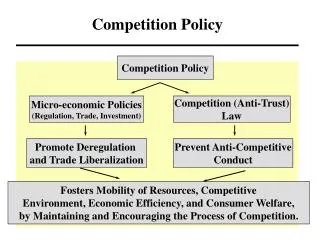
This module delves into key antitrust laws, including the Sherman Act, Clayton Act, and the FTC Act, that are designed to promote competition in markets. It also explores the role of government regulation in managing natural monopolies, addressing inefficiencies, and ensuring fair pricing through strategies such as marginal cost pricing and average cost pricing. By examining the pros and cons of these regulatory approaches, learners will gain insights into how public policy can enhance market efficiency and competition.

E N D
Module Micro: Econ: 41 77 Public Policy to Promote Competition • KRUGMAN'S • MICROECONOMICS for AP* Margaret Ray and David Anderson
What you will learnin thisModule: • The three major antitrust laws and how they are used to promote competition. • How government regulation is used to prevent inefficiency in the case of natural monopoly. • The pros and cons of using marginal cost pricing and average cost pricing to regulate prices in natural monopolies.
Promoting Competition and Efficiency • Antitrust laws • Price regulation
Antitrust Laws • Sherman Act • Clayton Act • FTC Act
Price Regulation • Marginal-cost pricing • Average-cost pricing