Eating Disorders
290 likes | 685 Views
Eating Disorders. Life Education 1. Myth vs. Facts. Myth: Skipping meals causes someone to lose weight quicker Fact: Skipping meals (especially breakfast) causes the body to retain fat to use as energy later. Myth vs. Fact. It is always easy to tell if someone has an eating disorder


Eating Disorders
E N D
Presentation Transcript
Eating Disorders Life Education 1
Myth vs. Facts • Myth: Skipping meals causes someone to lose weight quicker • Fact: Skipping meals (especially breakfast) causes the body to retain fat to use as energy later
Myth vs. Fact • It is always easy to tell if someone has an eating disorder • Fact: People can have eating disorders that few, if any, other people know about
Myth vs. Fact • Eating disorders are mostly a female issue • Fact: Males can suffer from eating disorders as well and usually go un/misdiagnosed. Males are also likely to suffer from an exercise disorder
Weight Management • What is weight management? • A program of SENSIBLE EATING and EXERCISE HABITS that will help keep your weight at a healthy level • Weight management requires a good diet AND exercise!
Dangerous Weight Loss Practices • Fad Diets: requires major changes in eating habits and promises quick results • Diet Pills: Weight lost is usually put back on once pills are no longer taken • Surgery: Not the substitute for diet and exercise
Body Image • The way you perceive your body • The way you see yourself or THINK the way others see you • Body Image: How you see and feel about your appearance and how comfortable you are with your own body
Body Image • Negative social norms: • Glorifying skinny models • Jokes about weight • Perfectionism
Distorted Body Image • When you see something that is NOT really there • Funhouse Mirror Effect
Eating Disorders • What are eating disorders? • Conditions that involve an unhealthy degree of concern about body weight and shape that may lead to attempts to manage weight in unhealthy ways • Physical AND psychological • Problem for MEN and WOMEN
Common Eating Disorders • Anorexia Nervosa: • Self starvation, distorted body image, low body weight • Bulimia Nervosa: • Eat food then uses vomiting or laxatives to rid the body of the food • Binge Eating (Bingeing): • Eating excessively large quantities in one sitting • Purging: • Some times follows bingeing. Involves vomiting or misusing laxatives to rid the body of food.
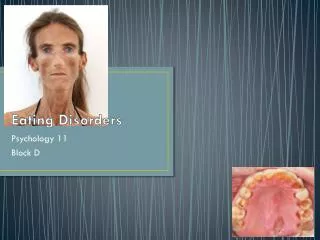
Anorexia • Signs and Symptoms: • Intense fear of weight gain • Overexercising • Preferring to eat alone • Preoccupation with calories • Extreme weight loss • Hair loss on head • Weakness/Exhaustion • Treatment: medical, psychological, and nutritional therapy • Family Counseling
Bulimia • Signs/Symptoms: • Preoccupation with body weight • Bloodshot eyes and sore throat • Dental problems • Bad breath • Treatment: Therapy, nutritional counseling
Binge Eating • Signs and symptoms • Above normal weight • Bingeing episodes accompanied with feelings of guilt, shame, and loss of control • Treatment: psychological and nutritional therapy
Disordered Eating Patterns • Not severe enough to be classified as a specific eating disorder • Can lead to serious health problems
What can you do? • Tell a trusted adult • Contact doctor, help lines, etc