Download

1 / 23
230 likes | 349 Views
Dr. David Pontin discusses the use of DNA barcoding in identifying jellyfish species, focusing on the mitochondrial gene cytochrome c oxidase I (COI). This research explores species delineation, cryptic species complexes, and hybridization within Physalia species, particularly the bluebottle jellyfish. The study highlights challenges in species identification and the importance of integrating molecular data with oceanographic variables to predict jellyfish occurrences in New Zealand. The findings underscore the complexity of jellyfish taxonomy and its implications for marine biodiversity.

E N D
Finding relationships and differences by bar-coding jellyfish species Dr. David Pontin
Barcodes • Barcode: A short series of vertical bars representing the digits 0-9, commonly used for product identification. • DNA Barcode: A short length of DNA that is able to differentiate between species. caggggcacgaatcagttaccaaatcctccaattagaactggcattacaaggaaaaagatcataacaaatgcatgagcagttactataacattatagagatgatcatctccaaacatggtaccaggtcctgacaa
Looking for DNA Barcodes • Mitochondrial DNA vs. Nuclear DNA • “fast evolving” tips only of interest • Must work in >90% of examples • 650 bp length of Mitochondrial DNA called cytochrome c oxidase I or COI
DNA Barcoding today • Formally Described Species :72,144 • Total Barcode Records 871,435 • Barcode of life project caggggcacgaatcagttaccaaatcctccaattagaactggcattacaaggaaaaagatcataacaaatgcatgagcagttactataacattatagagatgatcatctccaaacatggtaccaggtcctgacaa
A bit of controversy • What constitutes a species? • Rule of thumb for insects is 2% divergence (13bp) • Cryptic species/species complexes • DNA vs. morphology • COI doesn't work for everything (plants) • Is one gene enough?
Physalia (Siphonophora) Completely pelagic Taxonomically ambiguous Abundant around New Zealand Passive surface dispersal
PhD. goals • Identify the species • Identify important oceanographic variables that influence bluebottle occurrence • Predict bluebottle occurrence
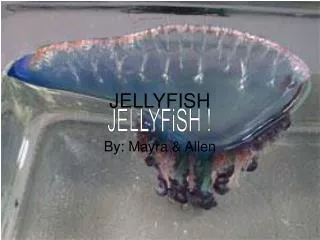
Portuguese Man o War Physalia physalis The Bluebottle Physalia utriculus
Bluebottle locations 54 specimens 13 locations COI and ITS sequenced
Likelihood trees ITS COI Physalia physalis
Hybridisation? • Two explanations for the ones that “jumped ship” • Hybridisation • Ancestral polymorphisum • More likely to be hybridisation • Range overlap • Broad cast spawning • Reported in the Anthozoa
Western Australia 1 • Doesn't fit any clan • If removed, green clan is well supported • What’s going on?
Conflict Tree 2 Tree 1 A A B C 60% 40% B D C D
Achieving goals (or not) • We still don’t know what species of bluebottle occurs in New Zealand • But it is a species complex needing a global review • COI was a good choice but results heighted the need for other markers with “difficult” species
Synergy • Both techniques confirm the existence of two circulatory systems • Molecular data shows what’s there and the models suggest how it got there • Methods allow potential blooming areas to be inferred so that other evidence can be examined in a directed manner • Not possible if methods are considered independently
Wider Picture • How many other jellyfish species could be the same?What does that mean for New Zealand's marine biodiversity? • Population identification has several usages • Pest control: resistance • Population linkages